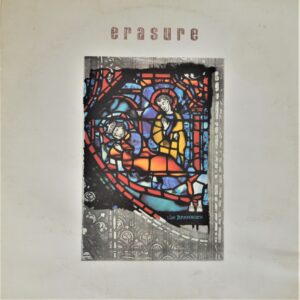
Erasure – The Innocents: Love not War
“Erasure – The Innocents: A Synth-Pop Masterpiece from the Iconic Duo” Summary: If you’ve ever found yourself dancing
Free UK shipping on orders over £50, and free shipping to Europe/North America on orders over £100.

Only 1 left in stock
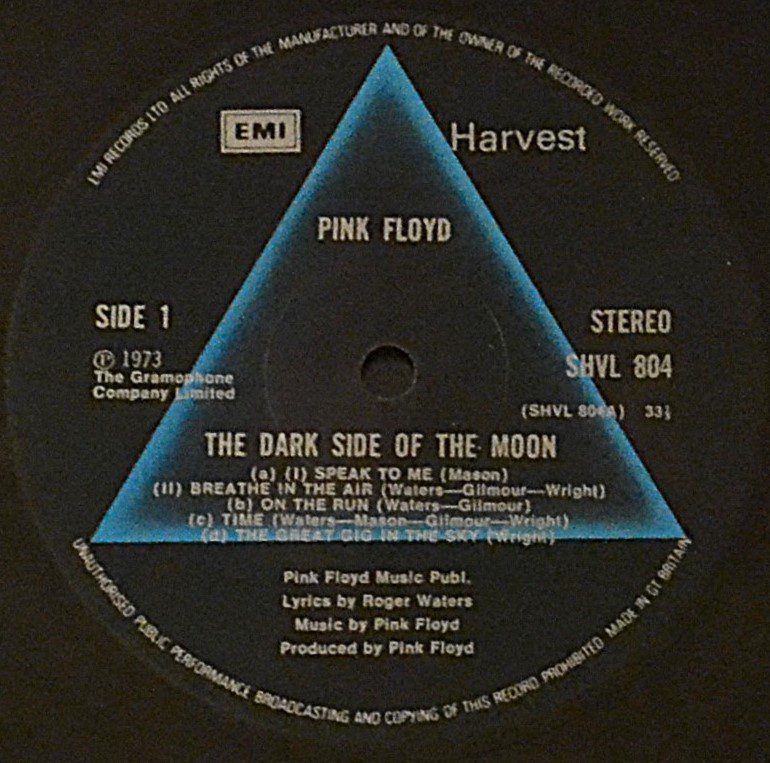
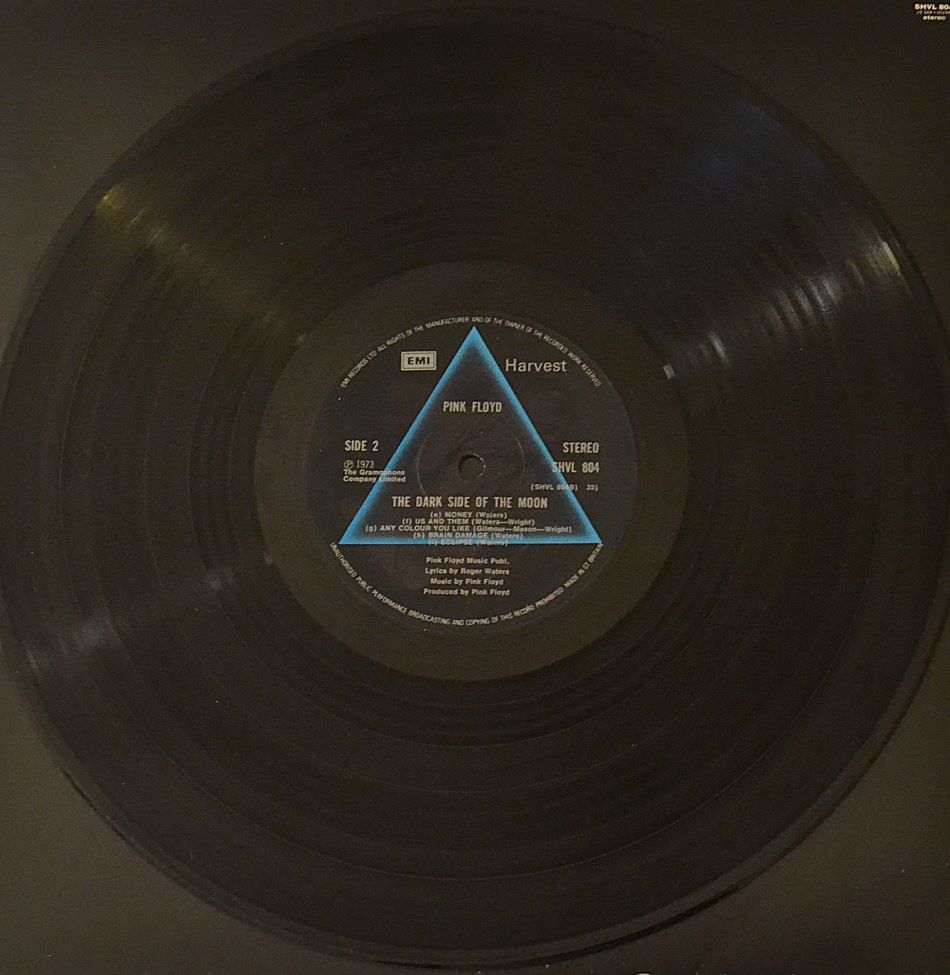
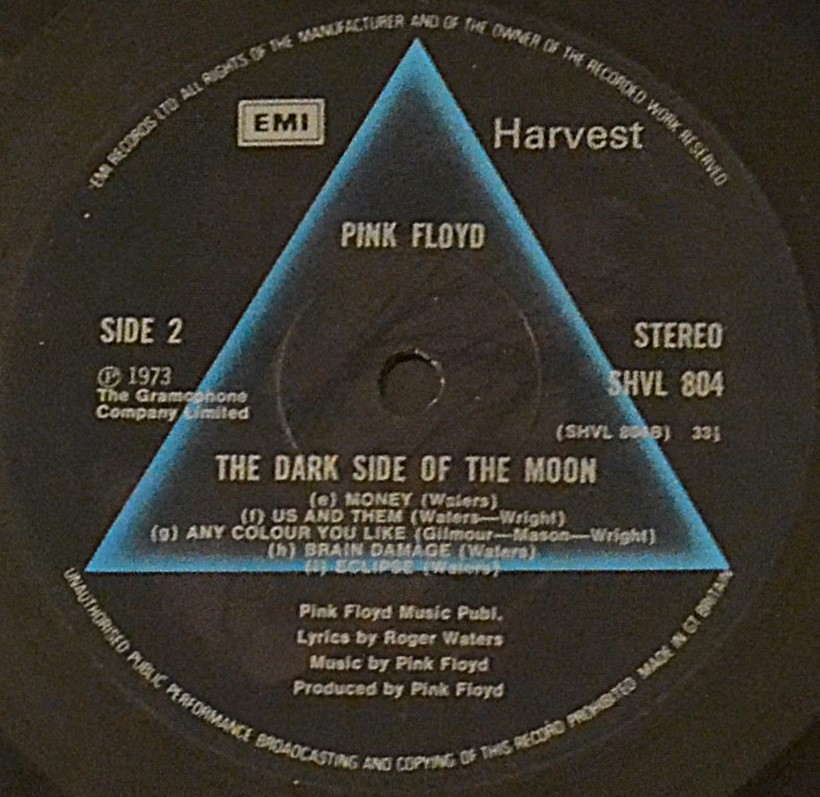
Explore Pink Floyd’s The Dark Side of the Moon vinyl. Original UK EMI Records Ltd. release, ℗ The Gramophone Co. Ltd.; recorded at Abbey Road Studios; printed/made by Garrod & Lofthouse Ltd.; published by Pink Floyd Music Publishers Ltd.; pressed by EMI Records.
Summary
Pink Floyd’s The Dark Side of the Moon (Harvest SHVL 804 / 1E 064-05249, 1973) is the vinyl that launched a thousand stereos. A seamless, 43-minute journey through time, money, madness, and the machinery of modern life, it’s progressive rock with a pulse you can actually feel—literally, thanks to the heartbeat that bookends the record. This UK-era Harvest pressing is the one that put Pink Floyd at No. 1 in the U.S., No. 2 in the UK, and on the Billboard charts for a record-breaking run. It’s a true landmark—musically, culturally, and sonically—still referenced by engineers, critics, and collectors today.
About the Artist
Pink Floyd grew from London’s psychedelic underground in the late ’60s. The early years were guided by Syd Barrett’s whimsical, otherworldly songwriting. When Barrett’s health deteriorated, David Gilmour stepped in, and the band—Gilmour, Roger Waters, Richard Wright, and Nick Mason—pivoted toward long-form, concept-driven music. By the time they reached 1973, they had already sharpened their sound on A Saucerful of Secrets, Atom Heart Mother, and Meddle. Meddle’s Echoes hinted at the immersive approach that Dark Side would perfect.
Influences? Experimental studio craft, jazz harmony (listen to Wright’s voicings), film sound design, and a fascination with technology. The band loved to test new toys, but they were never tech for tech’s sake—the gear always served the feeling. That balance peaks here.
About the Record
The Dark Side of the Moon is a concept album about the pressures of modern life: the grind of time, the lure and trap of money, the dislocation of travel, and mental health. Unlike the free-form suites that preceded it, this album is tightly structured, with songs that crossfade into a single, cinematic arc. It was recorded at Abbey Road Studios and engineered by Alan Parsons, with Chris Thomas brought in to polish the final mix.
What makes it different from earlier Floyd:
Focused songwriting. No meandering jams; every second counts.
Voices from life. The band recorded candid interviews with Abbey Road staff and friends—those voices become the album’s conscience.
Sonic storytelling. Tape loops, field recordings, and synth sequences act like characters in the drama.
Impact and recognition:
One of the best-selling albums ever (45+ million worldwide).
A 741-week marathon on the Billboard 200.
Grammy Hall of Fame inductee and a perennial on “Greatest Albums” lists (Rolling Stone, Q, MOJO).
A touchstone for hi-fi testing and vinyl collecting; first UK pressings with the solid blue triangle label are legendary among collectors.
About the Cover
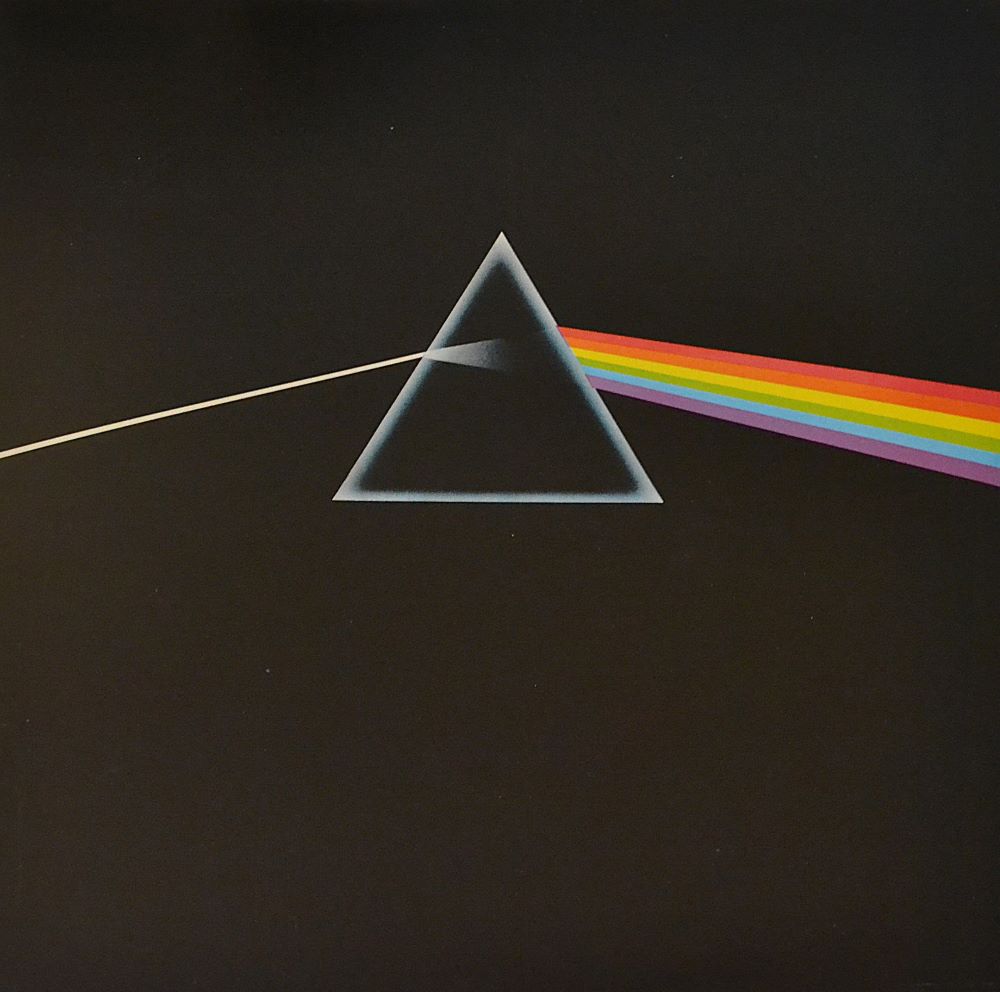
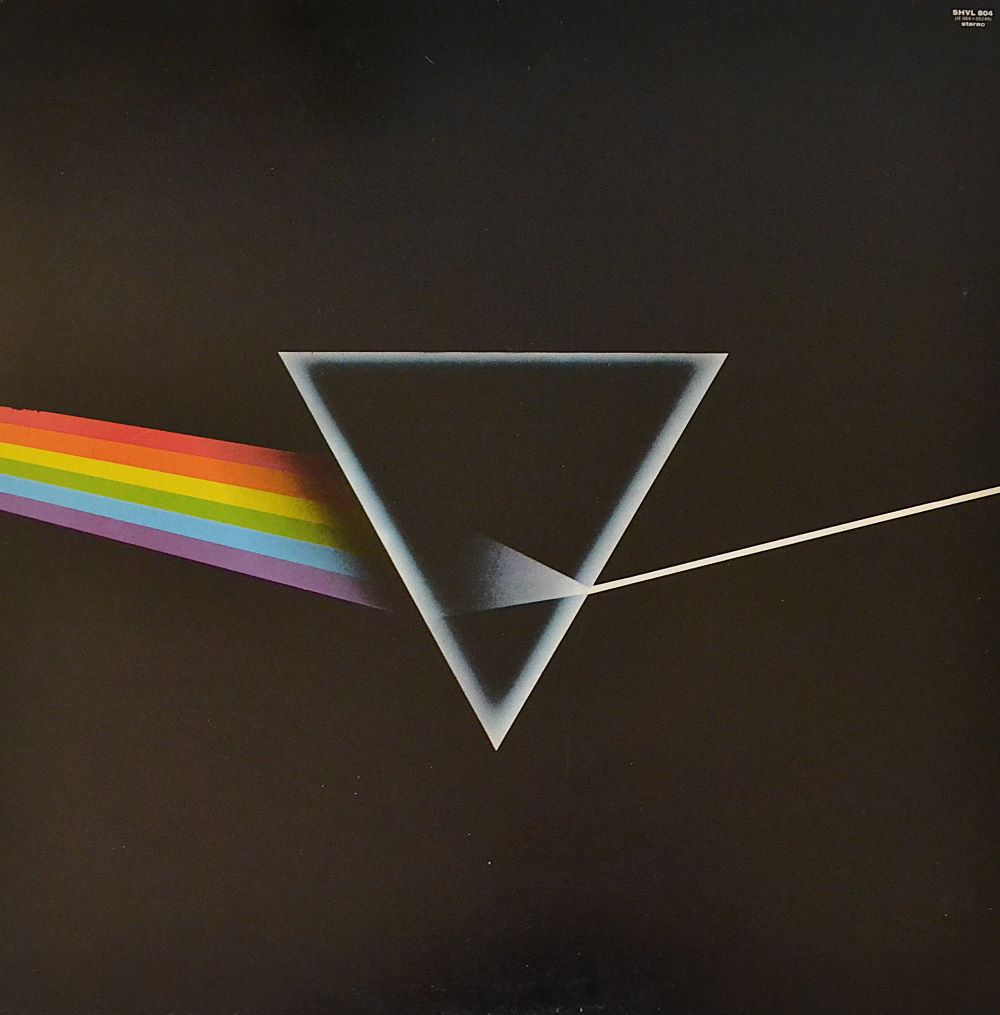
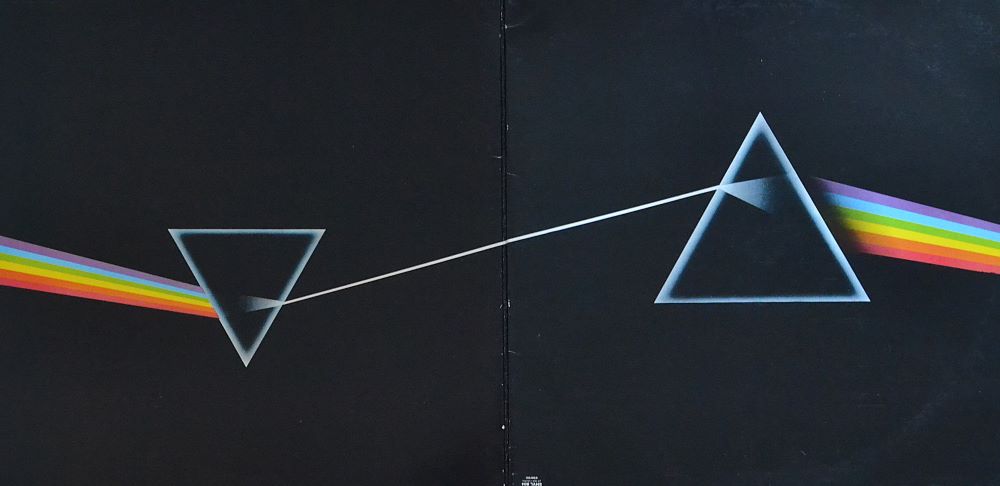
Storm Thorgerson and Hipgnosis, with designer George Hardie, devised one of the most recognizable covers in music: a white light beam splitting into a rainbow through a prism over deep black. No band name. No title. Just a statement.
Why it works:
It mirrors the album’s clarity of concept: light in, life out—fragmented by forces we can’t always control.
It nods to stage lighting and the band’s love of optics and spectacle.
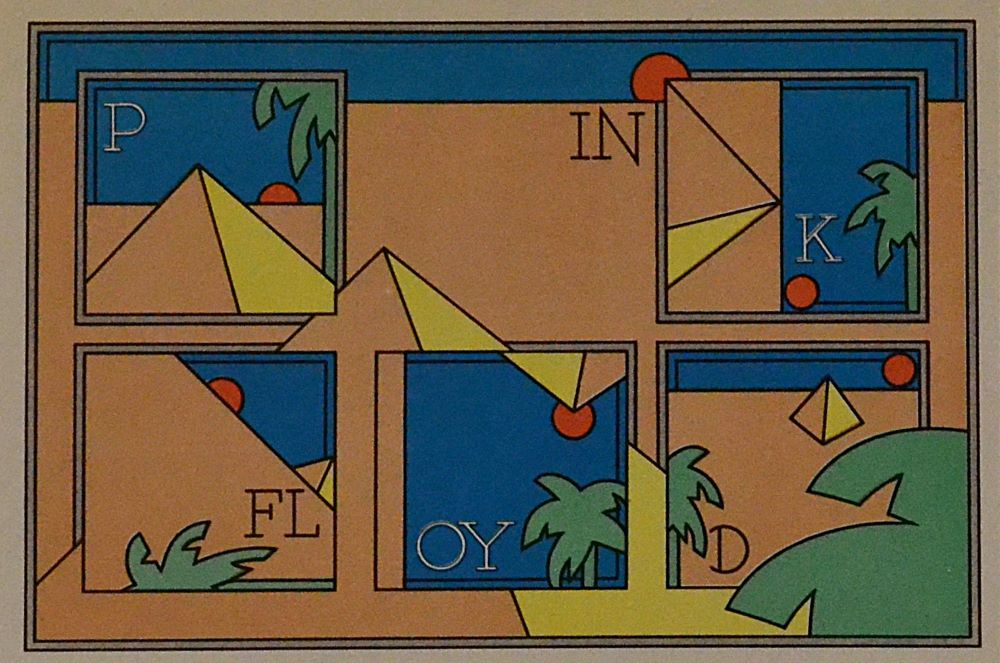
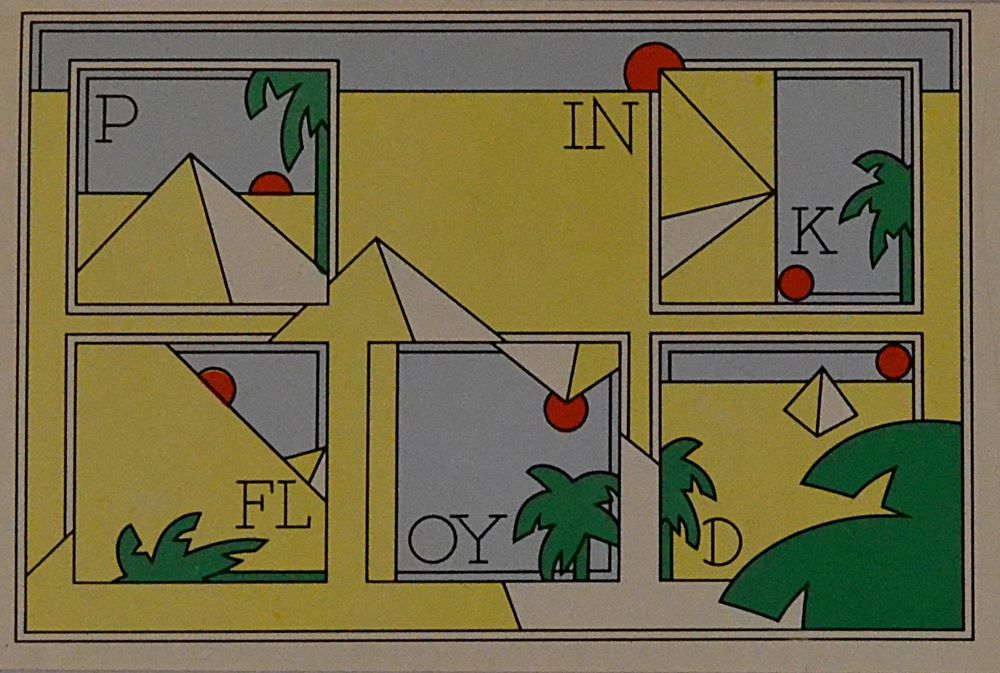
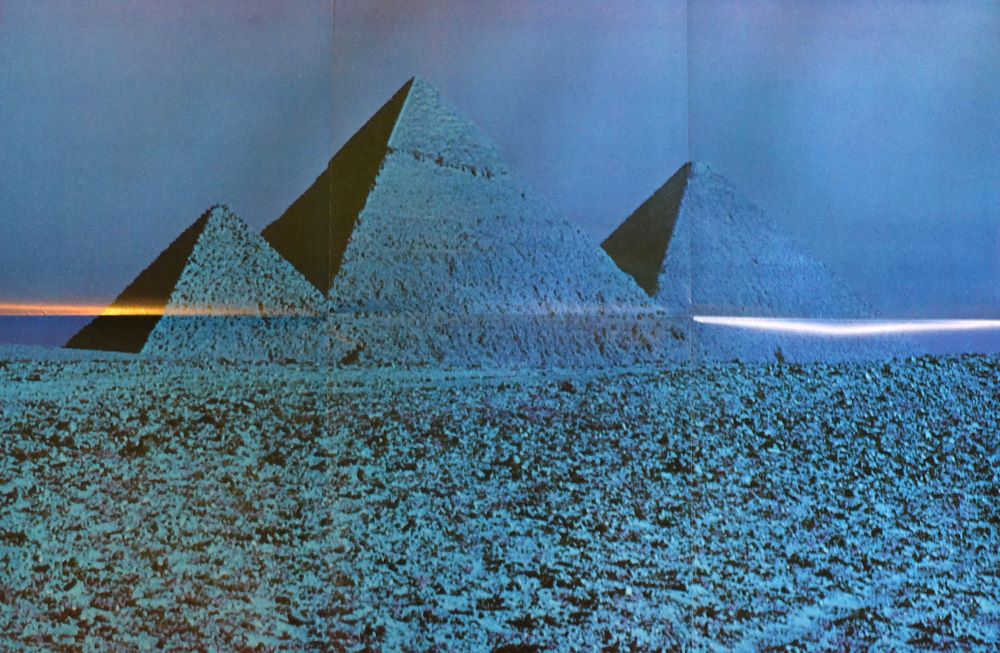
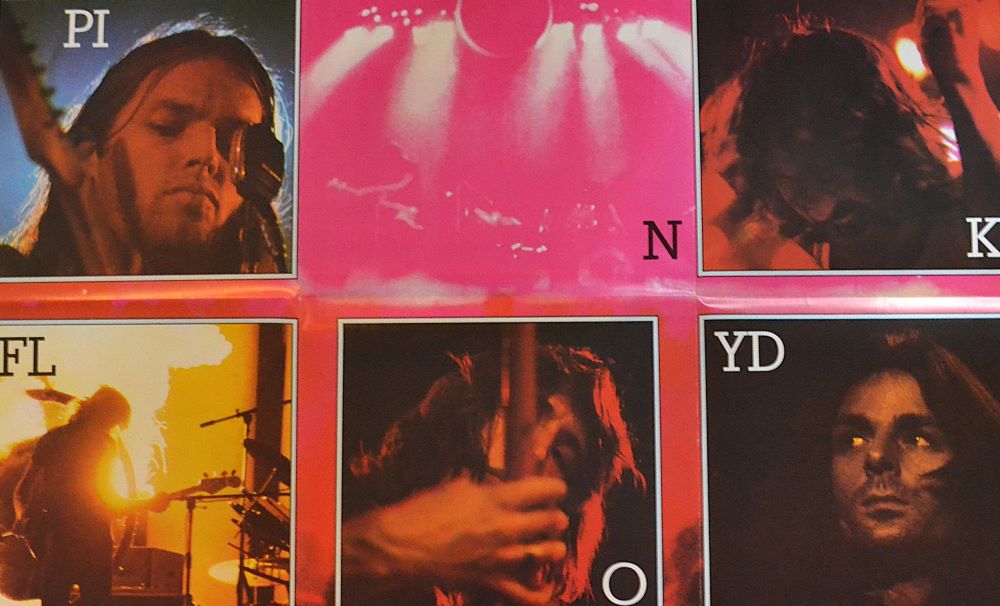
Original UK issues often included two posters (band and pyramids) and two stickers—completeness boosts collectability.
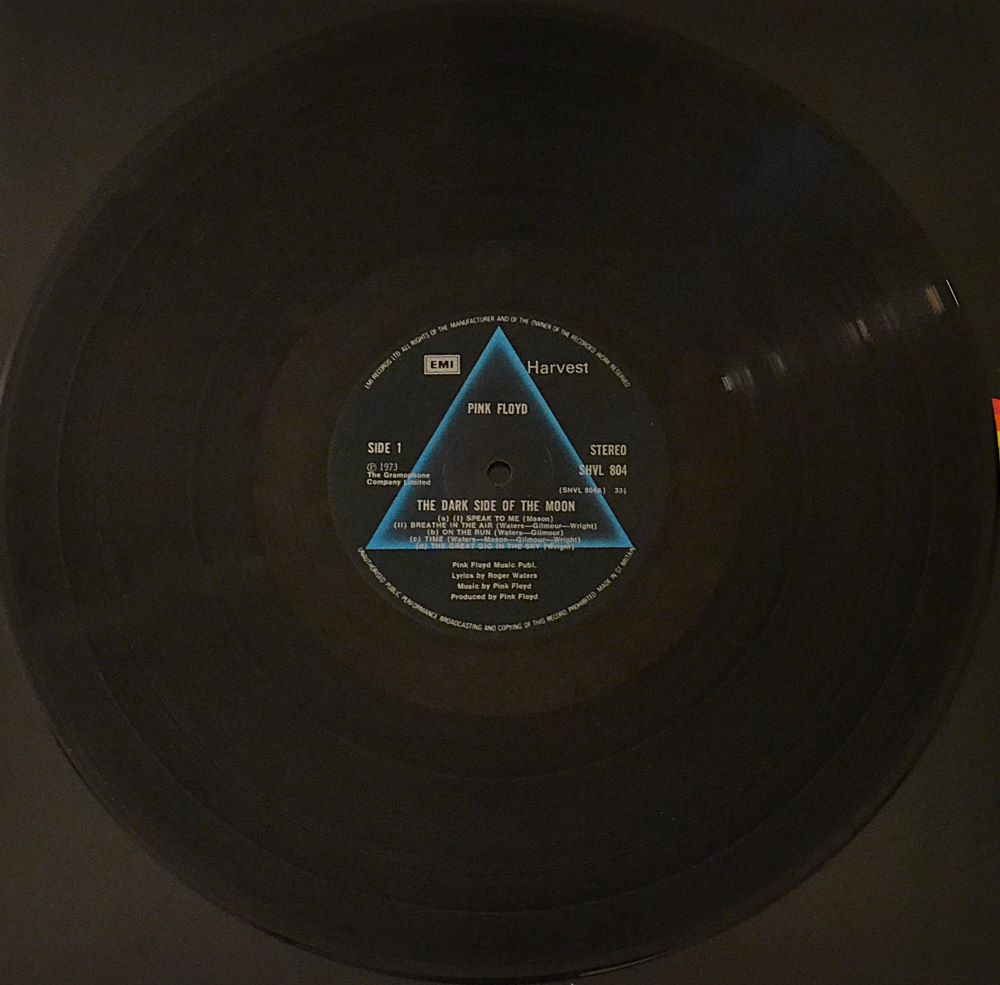
Early Harvest pressings are famous for the “solid blue triangle” label design; later runs switched to an outline triangle.
About the Lyrics & Music
This is where the magic lives. The album’s flow is the point, but a few highlights shine:
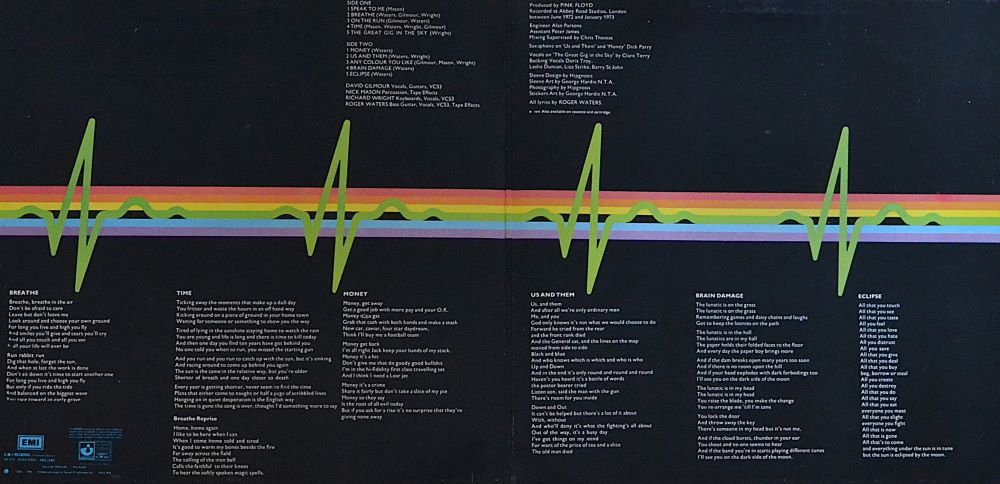
Speak to Me/Breathe: The heartbeat. The cash registers. The laughter. It’s the overture that gently glides into Breathe, where Gilmour’s lap-steel swells and Waters’ lyrics introduce the central tension: stay grounded before time slips away.
On the Run: A metamorphosis from a 1972 live jam called The Travel Sequence into an EMS Synthi AKS-driven panic attack. Alan Parsons programmed the sequencer; airport announcements and footsteps make it feel like you’re sprinting to a gate that keeps moving.
Time: Those clocks? Parsons recorded them in an antique shop as a demo for quadraphonic sound. The famous rototom intro leads to one of Gilmour’s greatest solos. Waters’ lyric stings with midlife math: you thought you had forever. You didn’t.
The Great Gig in the Sky: Richard Wright’s chord progression meets Clare Torry’s improvised, wordless vocal—raw, human, unforgettable. Torry later received co-writing credit, acknowledging her essential contribution.
Money: Built from a literal tape loop of cash registers, coins, and receipts snipped and spliced into a 7/4 groove. Then it flips to 4/4 for Gilmour’s blues-rock fireworks. Dick Parry’s sax lines add grit and swagger.
Us and Them: Evolved from Wright’s earlier “Violent Sequence.” Jazz harmony and a lyric about conflict at every scale—personal to geopolitical. Parry returns with a sighing, melancholic sax that feels like smoke in a cathedral.
Any Colour You Like: A shimmering instrumental wash—synth and guitar passing phrases like sunlight across water. The title is a nod to Henry Ford’s “any color so long as it’s black,” which suits the album’s consumer-culture critique.
Brain Damage/Eclipse: Waters centers the cost of madness—for the individual and the society that keeps pushing. The closing line, “and everything under the sun is in tune, but the sun is eclipsed by the moon,” lands with inevitability. Then, back to the heartbeat. Cycle complete.
Production nerdery that matters:
Abbey Road’s TG12345 console, EMT plate reverbs, and tape-based effects.
EMS VCS3/Synthi textures, Binson Echorec delays, Hiwatt amps, and Gilmour’s Stratocaster tone that somehow feels like sky.
Interviews on note cards prompted those iconic spoken fragments. Fun fact: Paul McCartney’s answers were considered too self-conscious to use. The doorman wasn’t—and he gets the last word: “There is no dark side of the moon really…”
Critical takeaways:
Contemporary reviews praised the sonic ambition and cohesion; some critics downplayed its “prog” label because it’s so emotionally direct.
Decades later, publications like Record Collector and The Vinyl Factory often highlight the album’s pressing history and the enduring thrill of an original Harvest copy on a good system.
Conclusion
The Dark Side of the Moon is one of those rare records that sounds intimidating until the needle drops—then it’s immediate, human, and strangely comforting. It’s the perfect fusion of concept and craft. If you’re building a vinyl library, this belongs near the front. If you already love Floyd, this Harvest-era pressing captures the album’s warmth and dynamics the way it was meant to be heard.
Other Recommendations
If you love this, try:
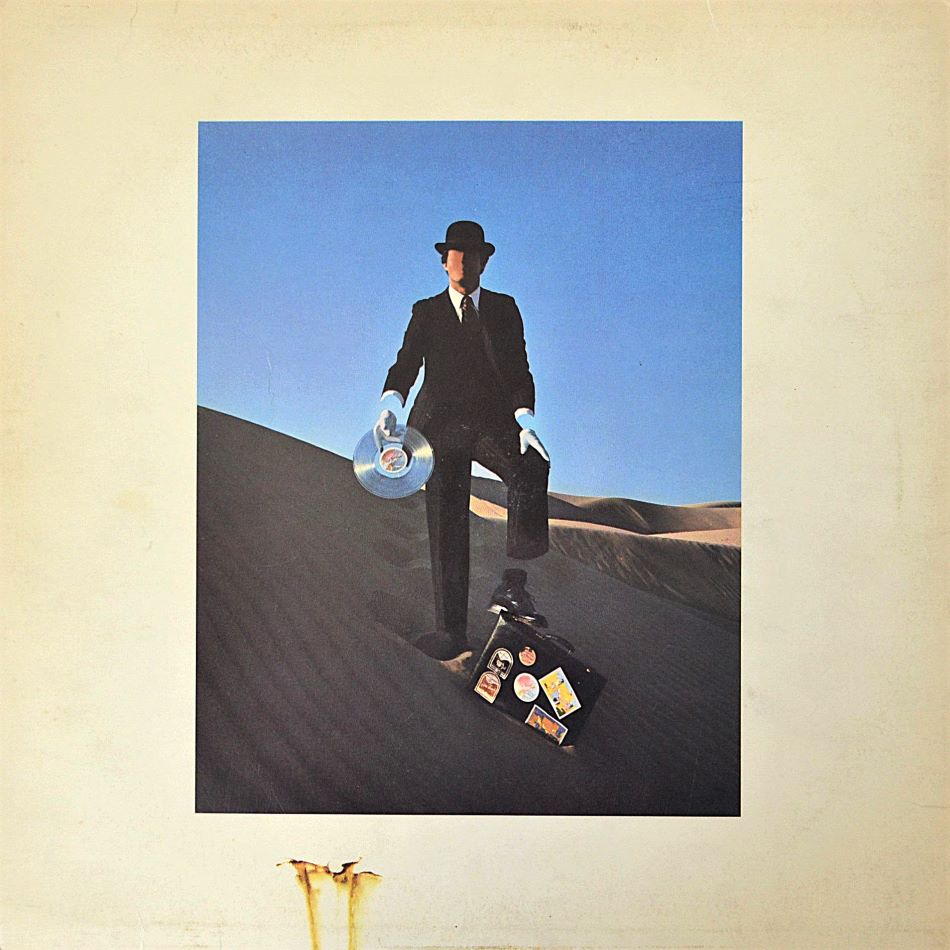
Pink Floyd – Wish You Were Here (1975) A spiritual companion piece about absence and the industry, with a synth palette you’ll recognize.
Pink Floyd – Meddle (1971): The bridge to Dark Side; Echoes previews the immersive arc.
Pink Floyd – Animals (1977): Darker, sharper social critique, with expansive guitar work.
Pink Floyd – The Wall (1979): A theatrical, narrative-heavy cousin with big hooks and bigger emotions.
The Alan Parsons Project – I Robot (1977): Audiophile-friendly, concept-driven, engineered to sparkle.
Mike Oldfield – Tubular Bells (1973): Another ’73 landmark of studio craft and instrumental storytelling.
Yes – Close to the Edge (1972) and King Crimson – Red (1974): For deeper progressive avenues with punch and precision.
Collector’s note
Harvest SHVL 804 is the classic UK catalog number; 1E 064-05249 appears across UK/European EMI family releases. Early UK pressings with the solid blue triangle labels, black poly-lined inner, posters, and stickers are especially prized.
Condition of inserts meaningfully affects value; complete packages are increasingly scarce.
Final word: This record isn’t just a listen. It’s a little ceremony you perform with your turntable. And it never gets old.
Find related collectibles that complement your current collection. From pieces of the same era or by the same artist to similar themes or materials, these related products are sure to add value and interest to your collection. Discover new gems and expand your collection with our carefully curated selection.
Take your collecting passion to the next level by diving into the history and cultural significance of your favorite pieces. Our expertly curated articles provide in-depth information on rarity, value, and more. Discover hidden gems and gain a deeper appreciation for the collectibles you love with our latest articles.
“Erasure – The Innocents: A Synth-Pop Masterpiece from the Iconic Duo” Summary: If you’ve ever found yourself dancing
Summary Step back into the exhilarating world of 1979 and rediscover “Reggatta de Blanc” by The Police. Released
Summary The Alberts, The Bonzo Dog Doo Dah Band, and The Temperance Seven released a vinyl record in
Free shipping in the UK for orders over £50, and in Europe/North America for orders over £100.
At CelebrisClub, we believe that every collectible tells a story. That’s why we provide you with the most detailed and informative information on ultra-rare collectibles. From limited-edition releases to vintage finds, our expertly curated selection offers a wide range of collectibles for every collector. Expect high-quality images, in-depth articles, and a trustworthy and enjoyable shopping experience. Join us on a journey to discover the hidden gems of collecting and unlock the world of ultra-rare collectibles.
© 2023 CELEBRISCLUB – All rights reserved.
Reviews
There are no reviews yet.
Only logged in customers who have purchased this product may leave a review.