Summary
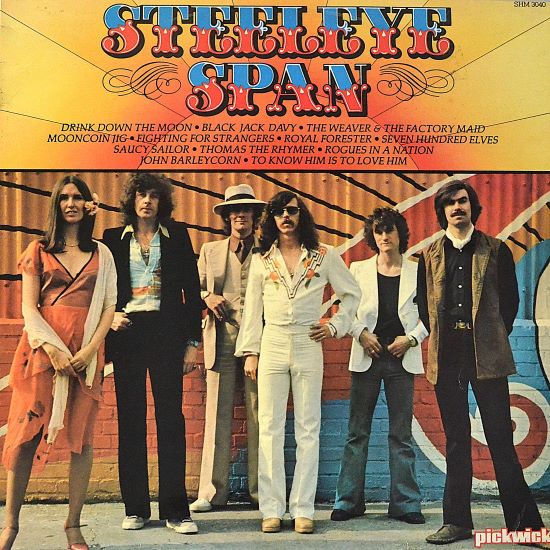
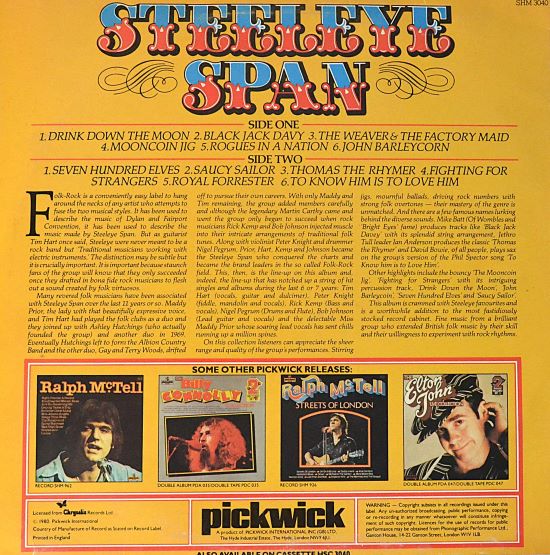
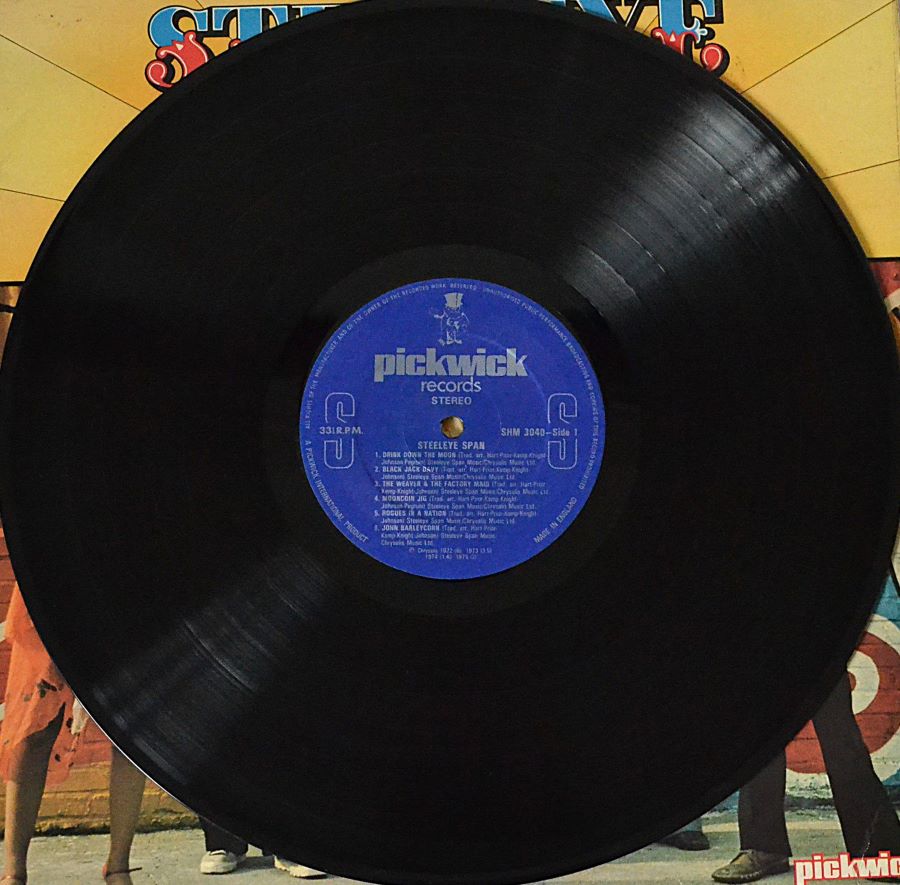
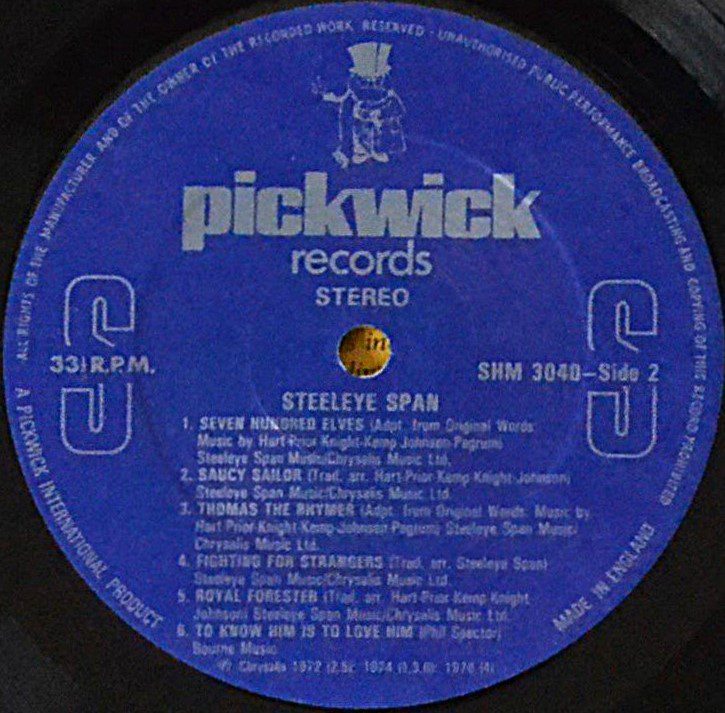
“Steeleye Span Album” (Pickwick Records SHM 3040, 1980) is one of those quietly brilliant budget compilations that sneaks up on you.
Pressed by Pickwick, a label known for affordable reissues, this LP pulls together some of Steeleye Span’s finest electric folk moments from their mid‑’70s heyday. It’s not a flashy “greatest hits” with gold foil and hype stickers. Instead, it’s a no-nonsense, very British package: strong track selection, pure analogue sound, and a snapshot of a band who turned centuries-old songs into something you could actually dance to.
If you’re new to Steeleye Span, this record works as an easy, low‑risk doorway into their world. If you’re a fan, it’s the sort of compilation you spin because it just flows—no skipping, no filler, just a lean, satisfying journey through their folk‑rock universe.
About the Artist
Steeleye Span formed in 1969, right in the middle of Britain’s folk revival. The basic idea:
Take traditional British and Irish folk songs, keep the stories, and electrify everything else.
A few quick points about them:
They were part of the same movement as Fairport Convention, but leaned even more heavily into pure traditional material rather than singer‑songwriter fare.
The revolving-door early line-up settled around the core of:
Maddy Prior – unmistakable lead vocals.
Tim Hart – vocals, guitar, dulcimer.
Peter Knight – violin, keys, occasional vocals.
Rick Kemp – bass, vocals.
Bob Johnson / Martin Carthy – guitars at different points.
By the mid‑’70s, they’d become chart‑friendly folk stars, landing hits and TV appearances without ever abandoning ballads about ghosts, shipwrecks, and murderous lovers.
Their influences reach deep:
Traditional ballads collected by Francis Child and Cecil Sharp.
English dance tunes, medieval church music, pagan themes, and country dances.
Rock and pop production from the era – electric guitars, drum kits, and studio layering.
By the time Pickwick compiled “Steeleye Span Album” in 1980, the band had:
Released a strong run of albums on Chrysalis.
Scored hits like “Gaudete” (a Latin Christmas chant turned folk‑rock single) and “All Around My Hat”.
Earned a reputation as the band that made old songs sound modern without stripping away their history.
This compilation catches the band after they’ve proven their concept, when their sound is confident, tight, and fully formed.
About the Record
“Steeleye Span Album” is a budget compilation, but don’t let that phrase fool you. In the vinyl world, that often means:
Licensed tracks from a bigger label.
No-frills packaging.
Surprisingly great value.
Thematically, this record plays like a crash course in electric folk:
You get narrative ballads about betrayal, magic, and misfortune.
Up‑tempo jigs and reels that flirt with rock rhythms.
A cappella and choral moments that show just how strong their harmonies are.
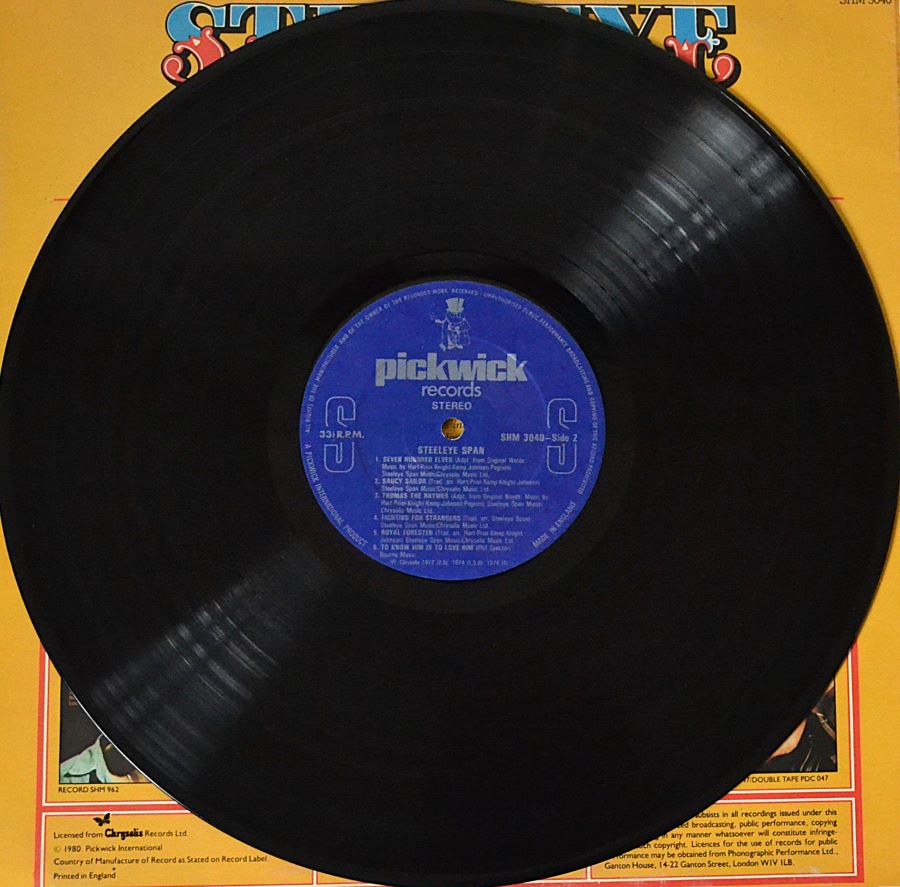
While exact track listings can vary by issue and territory, copies of this album typically draw from the mid‑’70s Chrysalis period, when Steeleye Span really nailed their balance of:
Traditional storytelling.
Rock backline (bass, drums, electric guitar).
Fiddle and vocal harmonies front and centre.
How it differs from their “main” albums.
Compared to the band’s studio records like Below the Salt or All Around My Hat:
No overarching concept – this is more like a carefully curated playlist.
Instant gratification – Pickwick leans on the most accessible, catchy, and memorable cuts.
Snapshot effect – you hear tracks from slightly different sessions sitting side by side, highlighting just how consistent the band’s identity was.
For someone flicking through a crate in 1980, this LP would’ve been:
Cheaper than a brand-new Chrysalis pressing.
A smart way to see whether Steeleye Span’s mix of ballads and backbeats fits your taste.
Culturally, by 1980, the first wave of British folk‑rock had already peaked, and punk and new wave were taking over.
This record, in that context, feels almost like:
A portable time capsule of when British folk could crack the charts.
A reminder that long before “heritage acts” became a term, Steeleye Span were already treating tradition as something very alive.
About the Cover
Pickwick’s sleeves were rarely extravagant, but that can be part of their charm.
While exact art variations exist, “Steeleye Span Album” typically features:
Simple, bold titling – the band’s name as the clear focus.
Clean, unfussy layout – classic library‑shelf design; you know exactly what you’re getting.
A budget label imprint (Pickwick / Hallmark styling) that instantly tells collectors: this is a compilation, not a new studio record
This minimal approach actually fits Steeleye Span well:
Their music is all about substance over flash – intricate stories, tight playing, deep roots.
The plain design mirrors that folk ethos: nothing overly styled, just the essentials.
For crate diggers, sleeves like this have become almost a sub‑genre:
“The secret‑weapon budget comp” looks. You see it, you know there’s a good chance of:
Proper analogue mastering.
Original mixes.
A surprising number of standout tracks for the price.
About the Lyrics & Music
The heart of this record is in the old songs given new life.
Steeleye Span specialise in traditional pieces where:
Someone usually dies.
Someone else usually lies.
And sometimes the supernatural gets involved.
On “Steeleye Span Album”, you’ll typically find a mix of:
- Story Ballads
These are the long-form narrative songs where Steeleye Span really shine. Common themes:
Forbidden love and betrayals.
Murder ballads with chilling twists.
Historical or legendary tales – knights, kings, or commoners in trouble.
Maddy Prior’s delivery is key here:
Clear diction – you can follow every twist in the story.
A voice that can sound both ancient and incredibly direct.
Harmonies that act like a Greek chorus, commenting on the action.
Musically, the band build around the story:
Fiddle lines that echo characters or emotions
Electric guitar adding tension, like a rock soundtrack to a centuries‑old plot
Drums that rise and fall with the drama
- Dance Tunes & Up‑Tempo Numbers
Steeleye Span never forgot that folk music was originally dance music:
Jigs and reels are driven by Peter Knight’s fiddle and tight rhythm section.
The bass and drums lock into patterns that feel surprisingly close to rock or even proto‑folk‑pop.
Electric guitars add bite, but never swamp the tune.
These tracks are the ones that often hook non‑folk listeners. They feel:
Familiar enough with the groove.
Different enough in melody and instrumentation to feel fresh.
- Vocal & Choral Pieces
One of Steeleye Span’s signatures is their ability to hold a track together using almost only voices:
Layered harmonies on old religious or seasonal songs.
A cappella or near a cappella arrangements where the rhythm is driven by vocal phrasing.
Occasional use of simple percussion or drone to underpin complex harmony.
Songs in this style helped win them broader recognition:
Their hit “Gaudete” (often found on compilations of this era) was sung mostly in Latin and still managed chart action – a rare trick for any folk‑based act.
Production & Sound
Because this LP compiles material from earlier ’70s sessions, you’re hearing classic:
Analogue, tape-based recording.
Warm, slightly saturated tones on bass and drums.
Natural room ambience on vocals and fiddle.
Notable traits:
The mix often leaves air around the instruments – it never feels over-compressed or cramped.
Electric guitars are present but not dominant; the fiddle and vocals are the real stars
The drum sound is organic, closer to live folk‑rock than slick radio pop.
For vinyl collectors, that combination of warm analogue source and unfussy budget cutting can be a plus. You often get:
A lively, slightly raw sound that suits the material.
Less “polish,” more presence.
Conclusion
“Steeleye Span Album” is a classic example of the budget LP that over-delivers.
It offers:
A concentrated hit of Steeleye Span’s best qualities – story-driven songs, sharp fiddle, and that unmistakable voice of Maddy Prior.
A genuinely useful entry point if you’re curious about British folk‑rock but not ready to commit to multiple full‑price originals.
A satisfying listen even for seasoned fans, because the track selection plays like a carefully sequenced mixtape from their golden era.
As a piece of vinyl history, it also reflects a moment when:
Traditional music could still slip into the charts
Compilations like this helped new listeners discover deep catalogues without needing insider knowledge
If you see a clean copy of Pickwick SHM 3040 in the wild at a fair price, it’s absolutely worth grabbing—both as a listening copy and as a neat little artefact of the folk‑rock boom.
Other Recommendations
If “Steeleye Span Album” hits the spot, here’s where to go next.
More Steeleye Span
All Around My Hat (1975)
Their most famous LP. Big, bright, and accessible. Essential if you like the more upbeat, radio‑friendly side of what you hear on the Pickwick compilation.
Below the Salt (1972)
A little darker and more atmospheric. Features some of their most haunting traditional arrangements and really shows off their harmonic work.
Parcel of Rogues (1973)
Politically and historically charged, with powerful ballads and biting energy. Great if you enjoy the more dramatic story songs.
Commoners Crown (1975)
Rock edges are a touch sharper here. Trivia favourite: actor Peter Sellers famously contributed to one track, a lovely crossover of worlds.
Similar Artists & Records
If you like the blend of electric rock and deep tradition:
Fairport Convention – “Liege & Lief” (1969)
The landmark British folk‑rock album. Earthier and slightly rougher, but absolutely foundational.
Pentangle – “Basket of Light” (1969)
More jazz and blues shades, but still rooted in tradition. Beautiful acoustic playing and ethereal vocals.
The Albion Band – “Rise Up Like the Sun” (1978)
A lush, ambitious folk‑rock record with some of the same players and a similar respect for traditional material.
Planxty – “Planxty” (1973)
If the Celtic side of things appeals, this Irish group channels reels and ballads with the same mix of reverence and energy.
For a vinyl-focused collection, “Steeleye Span Album” works perfectly as the “gateway record” on your shelf—something you can hand to a friend and say:
“This is what electric folk from the ’70s actually sounded like. Start here.”