Summary
Meet Outlandos D’Amour, the 1978 debut by The Police and the spark that set their reggae-meets-punk blueprint on fire. Pressed by A&M Records (UK catalog AMLH 68502), this is the one with Roxanne, Can’t Stand Losing You, and So Lonely—three singles that helped turn a lean, hungry trio into chart royalty. It’s tight, nervy, and surprisingly tuneful for something born in the age of safety pins and spit. If you like your late-’70s new wave with a sharp rhythmic swerve and lyrics that smirk as much as they sting, this record still lands with a jolt.
About the Artist
The Police were an unlikely perfect storm:
Sting (Gordon Sumner): jazz-inclined schoolteacher turned bassist-singer with a taste for literate hooks and falsetto yelps.
Stewart Copeland: a precision striker behind the kit, equally fluent in punk velocity and polyrhythmic tricks learned from a global upbringing.
Andy Summers: the veteran guitarist who had played with The Animals and in the British psych/jazz scene—older, cooler, and crucially, subtler.
They entered the fray at the height of punk but never quite fit the mold. Their chops were too good, their rhythms too syncopated, and their ears too open to reggae, dub, and jazz. Managed by Miles Copeland (Stewart’s brother), they hustled hard, cut their teeth on club stages, and—fun fact—dyed their hair blonde for a one-off Wrigley’s gum ad. The look stuck. So did the band.
About the Record
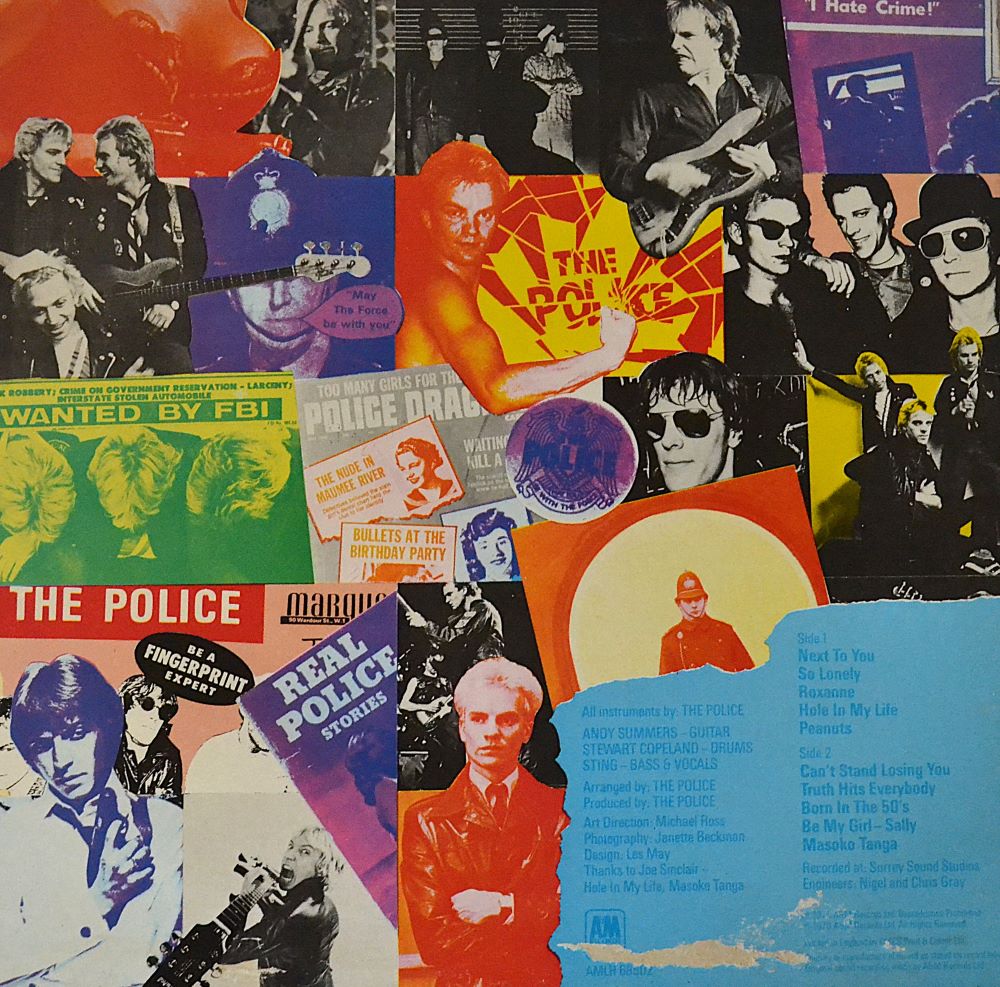
Outlandos D’Amour (a cheeky faux-French phrase roughly punning on “Outlaws of Love”) is where the Police formula snaps into focus: punk urgency, reggae lilt, pop melodies, and spaces wide enough for Andy’s guitar textures to breathe. It was recorded on a shoestring at Surrey Sound Studios with producer/engineer Nigel Gray, often at night to keep costs down. You can hear the economy—dry drums, upfront bass, minimal overdubs—but also the imagination. The album feels lean rather than bare.
As a debut, it set the tone for everything to come, but it’s rawer than their later triumphs (Reggatta de Blanc, Zenyatta Mondatta). The chorused guitar shimmer is subtler here; the rhythms are more jagged; the humor is darker. It’s also the record that proved their reggae-punk fusion wasn’t a gimmick. It was the band’s DNA.
By the numbers: the album climbed into the UK Top 10 and reached the US Top 30, with singles that built momentum on re-release. Roxanne first gained attention from UK radio, but persistence—and word of mouth—made it inescapable by 1979. Can’t Stand Losing You courted controversy (its single sleeve got banned by the BBC), which didn’t hurt its appeal.
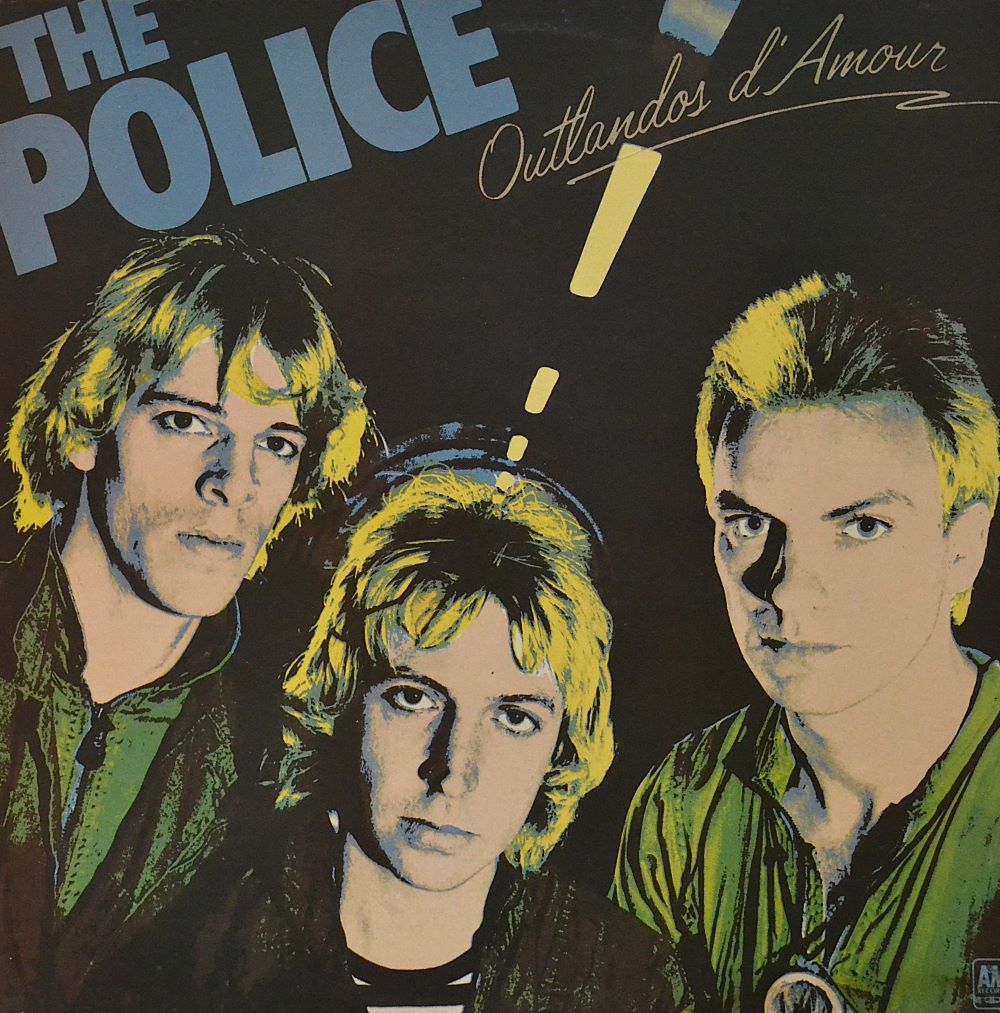
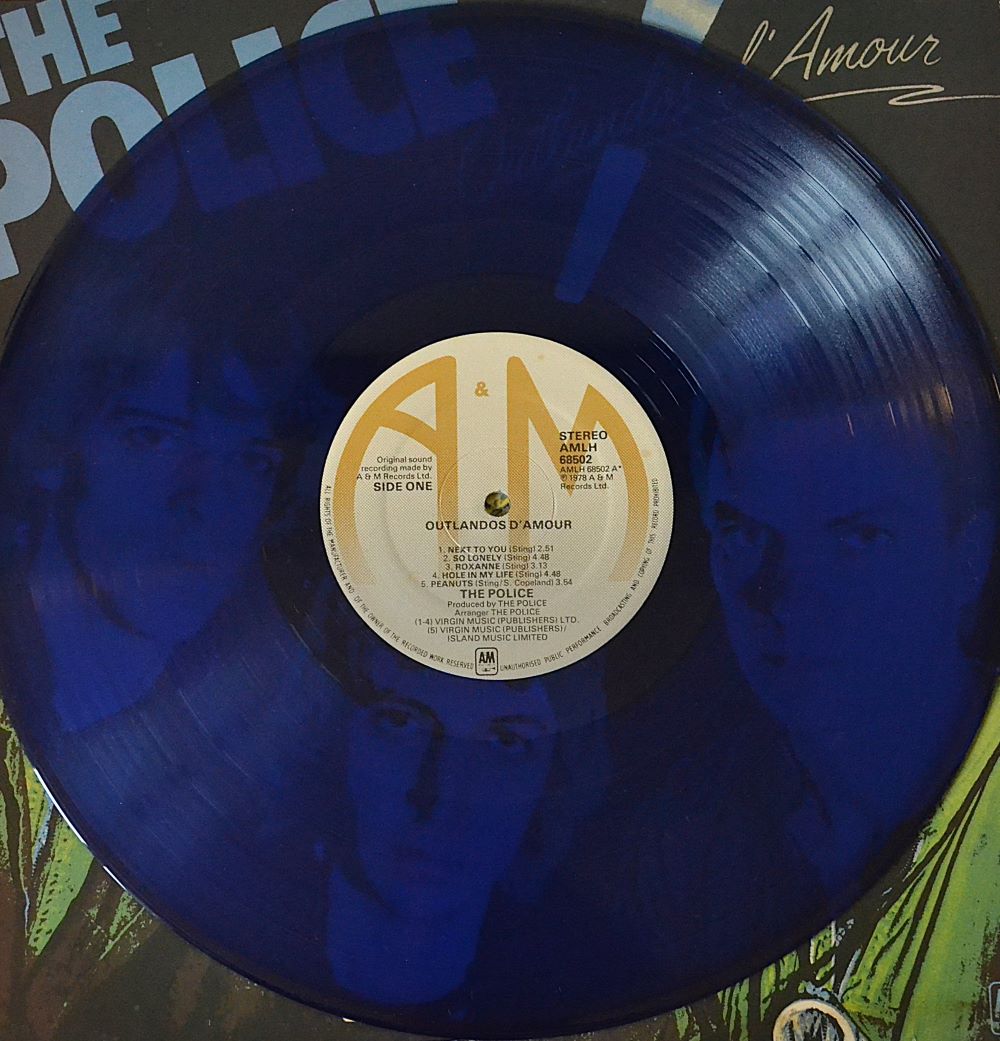
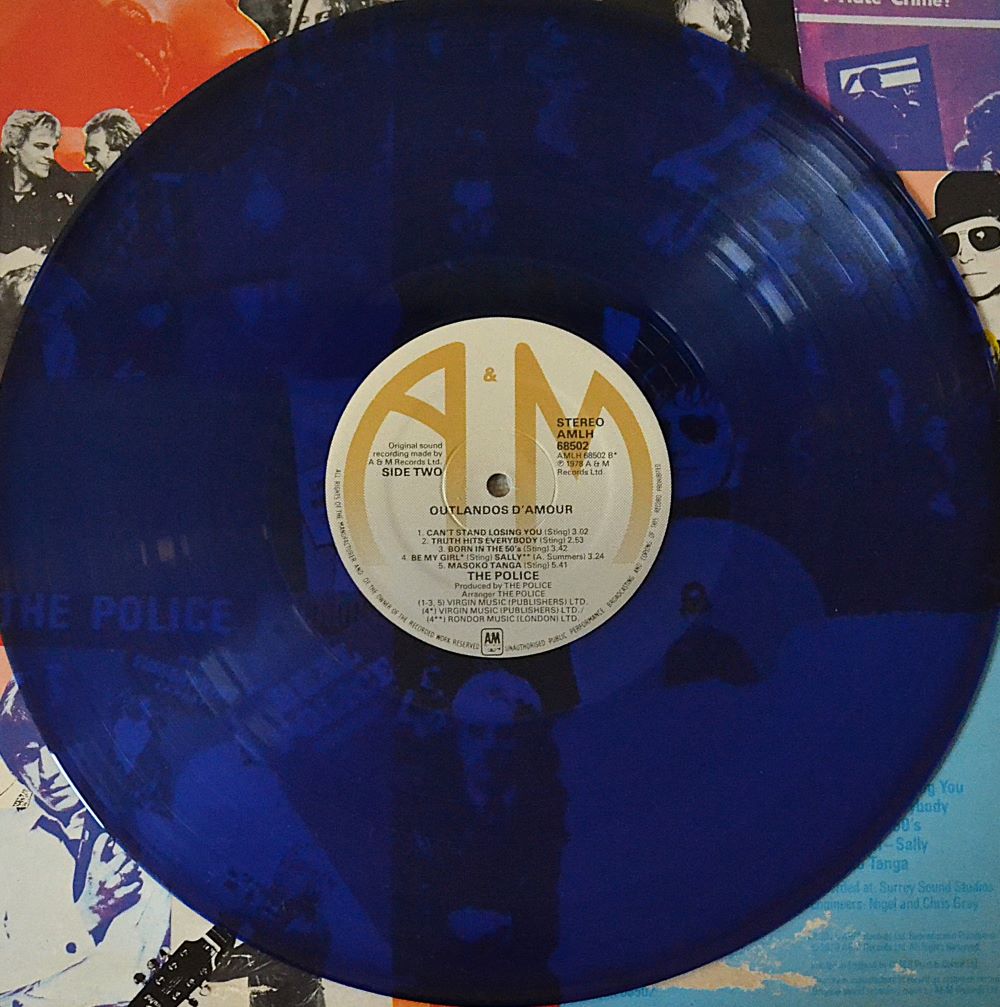
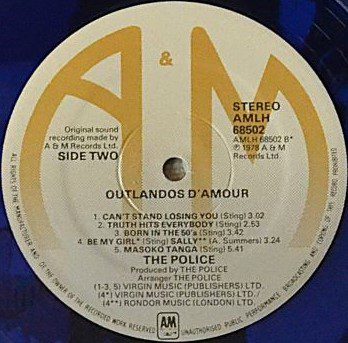
This is a blue vinyl.
About the Cover
You know it when you see it: the diagonal blue “THE POLICE,” the cool blue-tinted close-up of three intense faces, the white album title tucked in below. It’s clean, modern, and just a little dangerous—very late-’70s new wave. Those blonde heads? The happy accident of that Wrigley’s ad. The design frames the band as a unit: stark, minimal, ready to strike. It’s not loud with imagery; it’s loud with intent.
About the Lyrics & Music
Outlandos D’Amour balances big singles with deep-cut personality. A few highlights:
Roxanne: The forbidden-love classic, driven by reggae upstrokes and Sting’s aching vocal. At the top, you can hear a stray piano clonk and a chuckle—Sting reportedly sat on the keys by accident. They kept it, because it felt human.
Can’t Stand Losing You: Punk tempo, pop chorus, dark humor. Stewart’s drumming is razor-crisp; every hi-hat flick matters. The lyrics skate between melodrama and self-mockery, which somehow makes the hook stick harder.
So Lonely: Reggae pulse in the verse, explosive rock release in the chorus. This tension-and-release move became a Police signature.
Next to You and Truth Hits Everybody: Straight-ahead jams where the band flexes its punk speed without losing melodic bite.
Hole in My Life: Early proof that Sting could smuggle soul and jazz phrasing into a rock format. The bassline walks, the groove breathes.
Born in the 50s: A generational postcard—half affectionate, half skeptical—set to churning guitars.
Be My Girl — Sally: A tongue-in-cheek spoken-word detour from Andy Summers about a less-than-conventional romance. File under “only on a debut.”
Masoko Tanga: An ecstatic, wordless workout with Sting improvising phonetics over a hypnotic groove. It’s a peek into the band’s jam-room chemistry and a favorite of crate-diggers who love an offbeat album closer.
Thematically, the record swings between isolation, infatuation, and the absurdities of city life. Musically, it’s all about the triangle: Sting’s melodic, driving bass; Copeland’s whip-smart, off-kilter rhythms; Summers’ tasteful stabs and space-making textures. The production is unvarnished in the best way—close to the skin, quick on its feet, built for vinyl.
Cultural notes and legacy:
Along with a handful of post-punk peers, The Police helped normalize reggae rhythms in mainstream rock. That cross-pollination shaped radio for years.
Critics at the time were intrigued; later retrospectives have been openly adoring. Many outlets (from Record Collector to Vinyl Me, Please) now treat it as one of the sharpest debuts of its era, and Roxanne regularly appears in “greatest songs” lists.
The band would go on to Grammys and arena dominance, but the blueprint is all here.
Collector’s corner:
Label: A&M Records
UK catalog: AMLH 68502 (as listed on Discogs)
Original UK pressings are prized for their lively, upfront sound. Expect crisp drums and plenty of midrange bite.
Conclusion
Outlandos D’Amour is the moment The Police slammed the door on the ’70s and opened a window into the ’80s. It’s punchy, clever, and full of songs that refuse to age. If you’re building a foundational new wave collection—or just want a record that still feels fresh when the needle hits—this one earns its permanent place on the shelf.
Other Recommendations
If you loved Outlandos D’Amour, try:
The Police – Reggatta de Blanc (1979): A touch more spacious, with the Grammy-winning title track and Walking on the Moon. The reggae-tinged chemistry deepens.
The Police – Zenyatta Mondatta (1980). They refine the formula. Don’t Stand So Close to Me and De Do Do Do, De Da Da Da are smarter than their titles suggest.
The Police – Ghost in the Machine (1981): Moodier and more layered, with synths and sax. Spirits in the Material World is a masterclass in rhythmic economy.
The Police – Synchronicity (1983): Stadium-sized and artful. Every Breath You Take is the hook everyone knows; the album runs much darker and stranger.
Kindred spirits:
The Clash – London Calling: Genre-blending brilliance with a similar love for reggae and dub.
Talking Heads – ’77 or Fear of Music: Angular, brainy grooves with art-rock edges.
Blondie – Parallel Lines: New wave polish, pop hooks, downtown attitude.
Elvis Costello & The Attractions – This Year’s Model: Spiky, literate, and precision-engineered for late-’70s ears.
Spin it loud. Then flip it and do it again. This is The Police learning to be The Police—and it’s glorious.
Reviews
There are no reviews yet.
Only logged in customers who have purchased this product may leave a review.