Summary
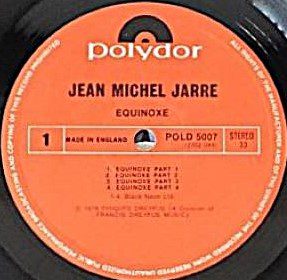
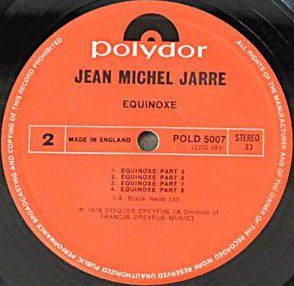
“Equinoxe” (1978 – Polydor POLD 5007 / 2302 084) is Jean‑Michel Jarre’s gleaming, weather‑soaked follow‑up to his surprise blockbuster “Oxygène.”
Where “Oxygène” sounded like drifting through space, “Equinoxe” feels like watching the sky change from dawn to storm to midnight, all inside your living room. It’s a continuous, eight‑part electronic suite built for big speakers, warm cartridges, and lights dimmed just a little too low.
If you love analog synthesizers, hypnotic rhythms, and albums that play like a film with your eyes closed, this is one of those vinyl records that earns its spot on the “do not sell” shelf very quickly.
About the Artist
Jean‑Michel Jarre didn’t start as the stadium‑filling electronic icon we know today.
Early roots: Born in Lyon, France, in 1948, Jarre grew up between classical piano lessons and the bohemian chaos of Parisian art and jazz clubs.
Avant‑garde beginnings: Before his solo fame, he worked at the Groupe de Recherches Musicales (GRM) in Paris, where Pierre Schaeffer and others were experimenting with tape loops, found sounds, and early electronic music.
Composer before “star”: In the early ’70s, he wrote for film, TV, and even pop singers, which trained him to think in themes and melodies rather than just abstract sound.
Then came “Oxygène” (1976). Recorded on a shoestring budget in his apartment, it became an international hit, selling millions and putting French electronic music on the global map. Suddenly, Jarre wasn’t just an experimental composer; he was a chart‑topping artist.
By the time “Equinoxe” arrived in 1978, Jarre was under real pressure:
Could he follow “Oxygène” with something that felt as dreamy but more technically advanced? His answer was to double down on concepts, build more sophisticated sequencer lines, and turn the studio into a kind of sci‑fi weather station.
About the Record
“Equinoxe” is often described as a day in the life of a planet. Not officially “program music,” but there’s a clear arc: from sunrise stillness to midday energy, late‑day turbulence, and night‑time reflection.
Genre & Style
Genre: Electronic/ambient / proto‑synthpop / progressive.
Feel: More rhythmic and kinetic than “Oxygène,” but still smooth and melodic.
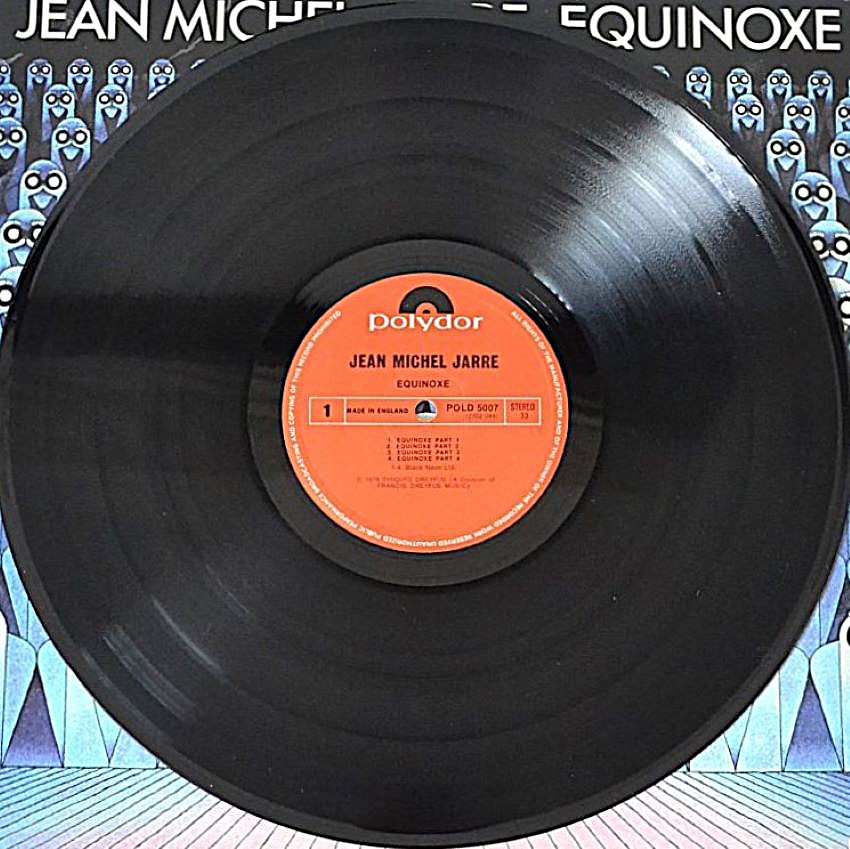
Structure: Eight tracks, all titled simply “Equinoxe Part 1” through “Part 8,” flowing into each other like one long piece.
Where “Oxygène” leaned heavily on slow, spacey pads, “Equinoxe” pushes the sequencers forward. You get:
Interlocking arpeggios.
Early electronic “drum” patterns.
Lush string‑like synth textures.
Playful, almost cartoonish lead lines.
Place in Jarre’s Discography.
“Equinoxe” is Jarre’s second major studio album and a crucial turning point:
It proves he wasn’t a one‑album wonder.
It moves from pure atmosphere toward a more rhythmic, structured approach.
It lays the foundation for the even more extroverted, techno‑leaning worlds of “Magnetic Fields” and “Chronologie.”
Commercially, it didn’t quite eclipse “Oxygène,” but it cemented Jarre as a long‑term force in electronic music, not just a fad of the late ’70s.
Cultural & Industry Impact
Electronic credibility: “Equinoxe” reinforced the idea that synthesizer albums could be both experimental and genuinely popular.
Influence: You can hear its fingerprints on later synthpop, trance, and even cinematic ambient music—particularly in how it balances melody, repetition, and slowly evolving soundscapes.
Live shows: The album’s success fed directly into Jarre’s legendary outdoor concerts with light shows and lasers, at a time when electronic musicians weren’t expected to be spectacular live performers.
About the Cover
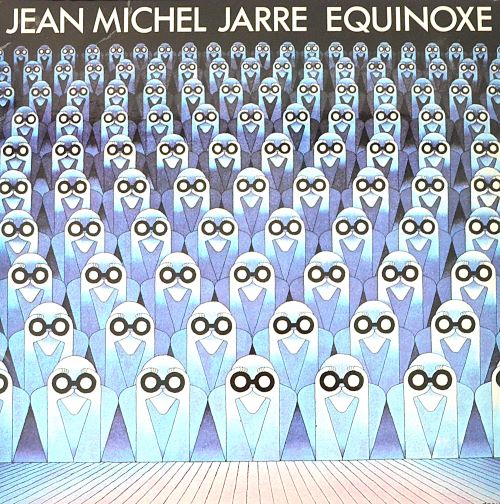
Even if you’ve never heard the album, you’ve probably seen the cover—a whole army of wide‑eyed, hooded watchers staring back at you.
The artwork was created by Michel Granger, the same artist behind the iconic “Oxygène” cover.
It shows row upon row of small, identical figures with huge, binocular‑like eyes, lined up under a moody sky.
Why it works so well:
Watcher theme: The cover suggests surveillance, observation, and the sense that “something is watching you,” which fits an album that feels like it’s tracking the day from an invisible vantage point.
Weather & sky: The cloudy, gradient sky echoes the album’s theme of changing atmospheres—literally the “equinox,” a moment of balance between day and night.
Visual continuity: Granger’s style connects “Equinoxe” to “Oxygène,” visually underlining that this is the next chapter in a shared universe.
On a vinyl sleeve, the design really gets room to breathe. The repetition of the figures has a hypnotic quality that mirrors the album’s looping sequencer patterns.
About the Lyrics & Music
A “Lyrics‑Free” Story
There are no sung lyrics on “Equinoxe.”
But the album still tells a story—just using melody, texture, and pacing rather than words.
Each “Part” feels like a scene:
Part 1: Dawn
Part 2–4: Daytime energy and activity
Part 5–6: Storms and tension
Part 7–8: Night, reflection, and a last flicker of playfulness
That makes it an ideal “imaginary soundtrack” record. You bring your own narrative; Jarre gives you the mood.
Sound & Production
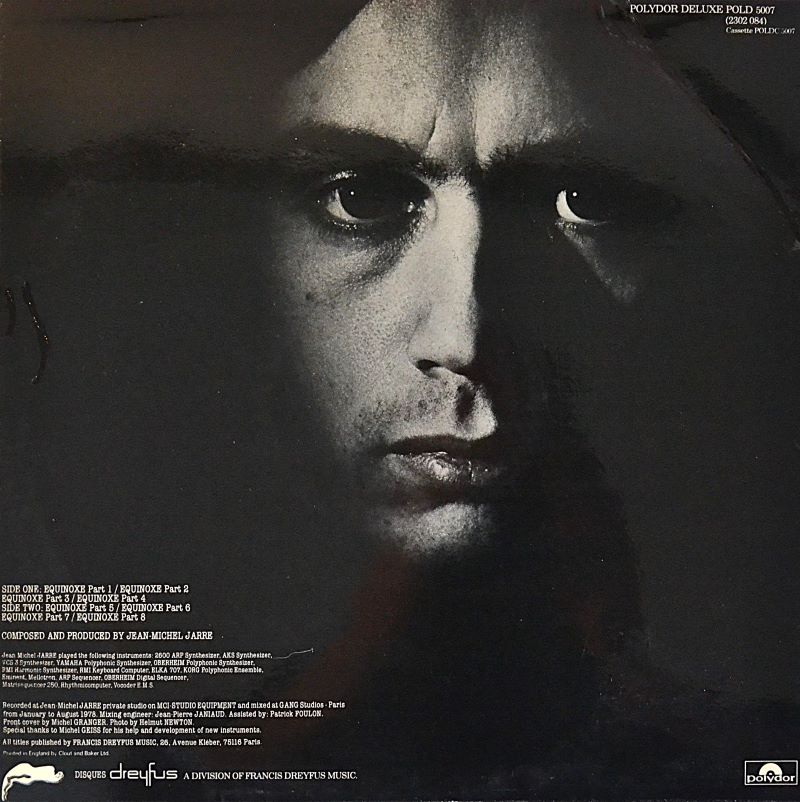
Jarre recorded “Equinoxe” primarily in his home studio in Croissy‑sur‑Seine, France, with engineer Michel Geiss. Some key ingredients:
Classic analog synthesizers (ARP 2600, EMS Synthi, RMI, Eminent string ensemble)
Custom‑built sequencing gear (notably the Matrisequencer 250, designed with Geiss)
Phasers and delays to give that swirling, liquid motion
In plain terms: this is peak late‑’70s analog wizardry, but used melodically, not just for noise.
Track‑by‑Track Highlights
Equinoxe Part 1
A gentle, misty overture. Slow, sustained chords and simple melodies give the feeling of a sunrise. It’s calm, patient, and sets the stage perfectly.
Equinoxe Part 2
The first real pulse of the album. A bright, bubbly sequencer line kicks in, and suddenly we’re awake. This track is often a fan favorite because it balances catchiness and sophistication—simple hook, complex undercurrent.
Equinoxe Part 3
More mysterious and slightly darker. The rhythms get busier, the harmonies a bit more unsettled, like clouds forming. It bridges the airy optimism of Part 2 with the drive of Part 4.
Equinoxe Part 4
Arguably, the hit of the album. Up‑tempo, melodic, and accessible, it’s the track you could imagine slipping into a late‑’70s radio show. Its main hook is pure earworm material; if anything on the record deserved single status, it’s this.

Equinoxe Part 5
The mood shifts. This is more atmospheric, almost like watching a storm approach from a distance. The textures thicken, and the percussion feels heavier and more dramatic.
Equinoxe Part 6
Tense and driving. This is the album’s storm peak—rapid sequences, nervous harmonies, and a sense of motion that feels almost cinematic. It’s one of the best examples of Jarre turning repetition into emotional build‑up.
Equinoxe Part 7
The energy is gradually released. There’s still rhythm, but it feels more playful again, less anxious. Think of it as the moment after the storm when the world is wet, bright, and a bit surreal.
Equinoxe Part 8
A quirky, almost whimsical closer. It’s as if the album gives you a wink on the way out. Melodic, lighter in tone, but tinged with a little nostalgia.
Critical Reception
Over time, critics and collectors have tended to view “Equinoxe” as:
More technically refined than “Oxygène”
A key stepping stone between early, dreamy electronic music and the more beat‑driven synth styles of the ’80s
One of Jarre’s most cohesive “concept” albums, since the eight parts knit together so seamlessly
It may not have the same household‑name status as “Oxygène,” but among electronic music fans and vinyl collectors, it’s often ranked right up there as a must‑own.
Conclusion
“Equinoxe” is the sound of a pioneering artist hitting his stride—confident, melodic, and more adventurous with rhythm and technology, without losing that sense of wide‑eyed wonder.
On vinyl, it really shines:
The analog warmth suits the synth textures perfectly.
The continuous flow from Part 1 to Part 8 makes side A/side B flips feel like act breaks in a movie.
The iconic cover art comes alive at full LP size.
If you’re building or upgrading a collection of classic electronic records, “Equinoxe” (1978, Polydor POLD 5007 / 2302 084) isn’t just a nice‑to‑have. It’s a cornerstone.
Other Recommendations
If “Equinoxe” hits the spot, these records pair beautifully with it:
More Jean‑Michel Jarre
Oxygène (1976)
The breakthrough. Slower, spacier, and a bit moodier. A perfect companion piece—put it next to “Equinoxe” on the shelf for a matching Granger artwork set.
Les Chants Magnétiques / Magnetic Fields (1981)
More playful and rhythmic, with shorter, catchier sections. You can hear Jarre edging toward the ’80s synthpop era.
Rendez‑Vous (1986)
Bigger, more cinematic, and written with grand outdoor concerts in mind. Great if you like Jarre in “epic spectacle” mode.
Similar Artists & Vibes
Vangelis – “Albedo 0.39” or “Spiral”
Greek electronic legend mixing bold melodies with cosmic themes. Slightly more dramatic, but a similar sense of scale.
Klaus Schulze – “Mirage” or “Timewind”
Longer, more meditative journeys. Less pop, more deep‑space exploration—great if you want to lean into the ambient side.
Tangerine Dream – “Stratosfear” or “Force Majeure”
Sequencer heaven. A bit rockier at times, but their late‑’70s period pairs excellently with Jarre’s work.
Add “Equinoxe” to your turntable rotation, and you’re not just buying a record—you’re inviting a particular kind of weather system into your room. One that sounds best at 33⅓ RPM.