
Summary
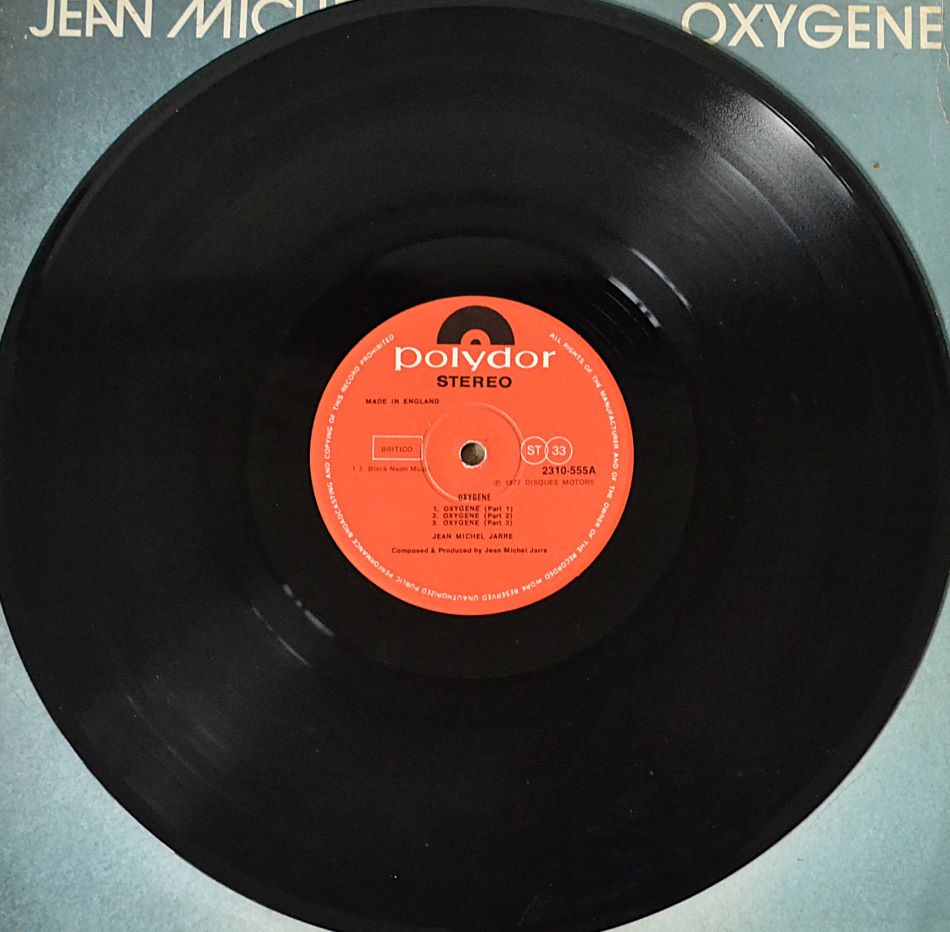
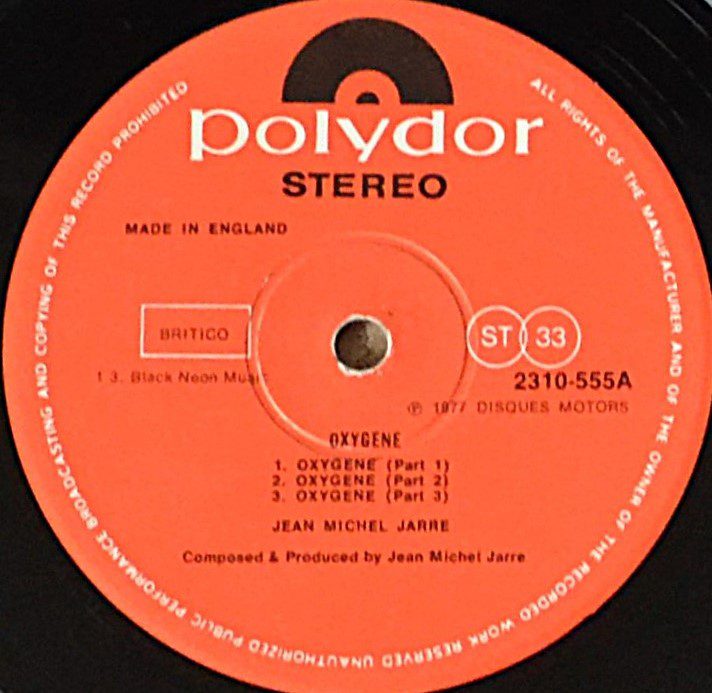
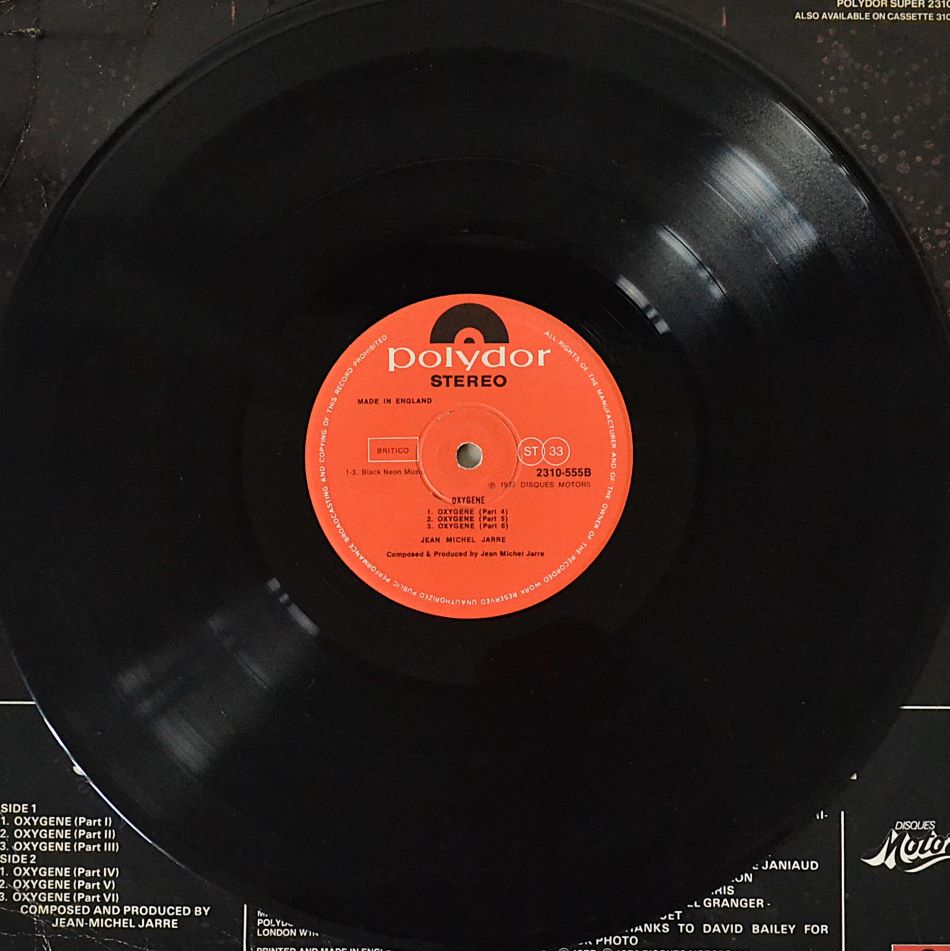
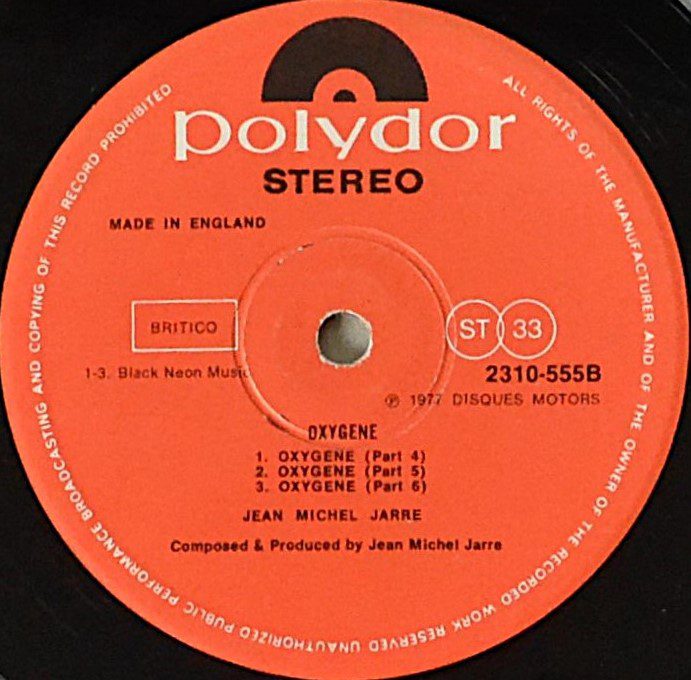
Slip Jean-Michel Jarre’s “Oxygene” (Polydor 2310 555, 1977) onto a turntable and you’re not just playing a record. You’re opening a window into the moment electronic music stopped lurking in laboratories and walked proudly into the living room.
“Oxygene” is a six-part, fully instrumental electronic suite by French composer (not really a singer!) Jean‑Michel Jarre. Recorded on analog synths in a tiny DIY home studio, it somehow went on to sell millions of copies worldwide and turn Jarre into one of the defining voices of electronic music.
For a vinyl lover, this 1977 Polydor pressing is a beautiful time capsule: warm, spacious, and packed with detail that digital reissues often smooth over. It’s music that feels both intimate and cosmic, like a sci‑fi movie projected directly into your headphones.
About the Artist
Before “Oxygene,” Jean‑Michel Jarre was not yet the stadium-filling synth wizard we think of today. His path to that status is a fascinating detour through avant‑garde sound labs, French pop charts, and experimental film music.
Musical heritage: Jarre is the son of the famous film composer Maurice Jarre (“Lawrence of Arabia,” “Doctor Zhivago”). But Jean‑Michel grew up mostly with his mother in Lyon. His fascination with sound came as much from street markets and jazz clubs as from the family name.
Early experiments:
In the late 1960s, Jarre joined Groupe de Recherches Musicales (GRM) in Paris, founded by Pierre Schaeffer. This was ground zero for musique concrète: tape splicing, found sounds, strange manipulations. Not exactly pop radio material, but it planted the seeds for how he would later treat synthesizers as sculpting tools rather than just “keyboard instruments.”
Pre-“Oxygene” work:
He released experimental singles like “La Cage” (1971).
Composed library and film music, including “Deserted Palace” and the soundtrack for Les Granges Brûlées.
Wrote for other artists, notably hits for French singer Christophe (“Les Mots Bleus” and “Les Paradis Perdus”), proving he could write melodies people remembered.
By the mid‑70s, Jarre was a composer with one foot in avant‑garde sound art and the other in French chanson. “Oxygene” was the moment he fused those worlds into something radically simple: melodic, emotional electronic music that still sounded futuristic.
About the Record
“Oxygene” isn’t just an album; it’s a single continuous piece of music split into six movements: “Oxygene (Part I–VI).” No lyrics, no guest singers, no obvious “radio hooks” except for Part IV, which accidentally became one.
Genre & Style
You could slot “Oxygene” under:
Electronic
Ambient
Early synth/space music
But labels don’t quite capture it. It’s more like a dreamy soundtrack to an imaginary planet, mixing:
Long, drifting synth pads
Simple but hypnotic melodies
Gentle, pulsing rhythms instead of heavy drums
Natural-sounding effects that evoke wind, breathing, and space
In an era when rock bands were still fighting for the loudest guitar solo, Jarre quietly put out a record where nothing “rocks” in the classic sense—and that was exactly its power.
Themes
Thematically, “Oxygene” hints at:
The environment – The title and cover suggest air, life, and fragility.
Space and isolation – It feels like an astronaut’s inner monologue.
Technology vs. nature – Analog synths mimic wind, waves, heartbeats, and distant storms.
It’s not preachy, but you can absolutely hear a sense of awe and anxiety about the modern world baked into these six parts.
Place in Jarre’s career
Compared to his earlier work, “Oxygene” was:
More personal: Self‑financed, recorded at home, and rejected by several labels before finally being released.
More minimal: No big orchestras or singers—just Jarre, his machines, and tape.
Shockingly successful: It became one of the best‑selling French albums of all time, eventually reaching the multi‑million mark globally.
It’s the record that transformed Jarre from a behind‑the‑scenes writer into an international headliner—and it paved the way for his later massive outdoor concerts and larger‑than‑life visual shows.
About the Cover
Even if you’ve never heard “Oxygene,” you may have seen the cover: a blue Earth, its crust peeled away to reveal a grinning skull underneath. It’s unforgettable.
The artwork is by French artist Michel Granger.
The painting existed before the album—Jarre reportedly discovered it in a gallery and immediately felt it matched the atmosphere and message of his music.
The piece was adapted and retitled to align with the album, becoming almost inseparable from it.
Why does it work so well
The cover captures the core mood of “Oxygene” in a single image:
Beauty + dread: The Earth is still beautiful, but clearly in trouble.
Environmental undertone: A subtle statement about pollution and the fragility of life on this planet.
Cosmic loneliness: Against a plain background, the Earth-skull feels strangely isolated—just like the music inside.
For vinyl collectors, this isn’t just a sleeve. It’s wall-art-worthy, and part of why original Polydor copies like 2310 555 feel so special: you’re holding a piece of 70s eco‑sci‑fi aesthetic in its original format.
About the Lyrics & Music
There are no sung lyrics on “Oxygene,” but that doesn’t mean it’s wordless. The music itself is the language—and it speaks clearly.
Production & Gear: A Kitchen-Sized Revolution
“Oxygene” was mostly recorded in Jarre’s improvised home studio, often described as being set up in his kitchen.
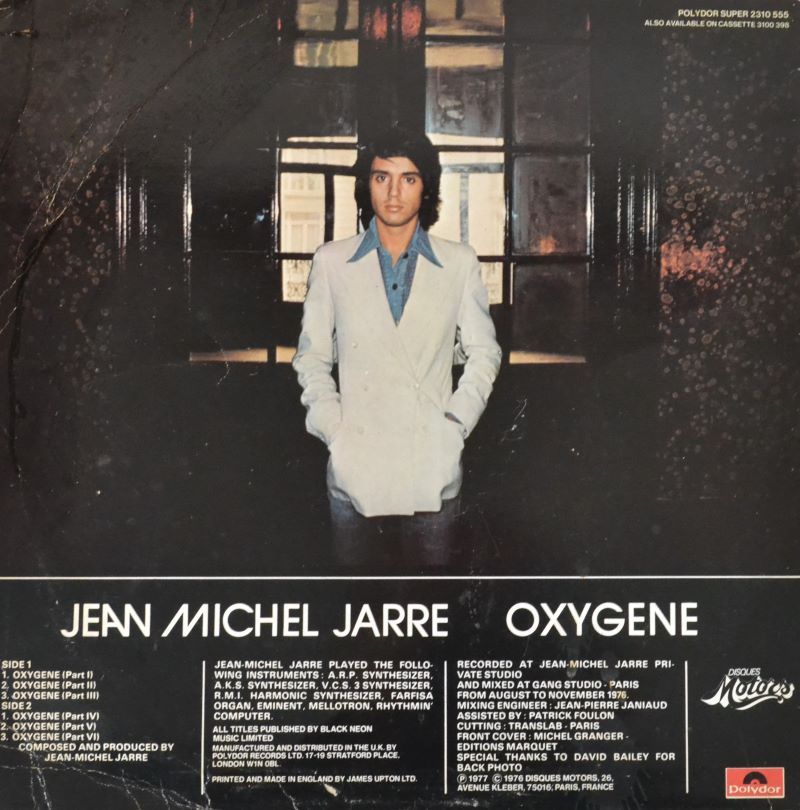
He worked with a small but powerful arsenal of analog gear, including:
EMS VCS3 & Synthi AKS – For those warbly, spacey bleeps and bubbling effects.
ARP 2600 – A semi‑modular synth that gave the album many of its lead sounds.
Eminent 310 string ensemble – Run through phaser to create those lush, sweeping string pads.
Farfisa organ & RMI keyboards – For harmonic grounding and texture.
Revox tape machines – Used not just for recording but for echo, looping, and layering.
The result is a sound that is:
Warm, due to analog circuitry and tape saturation.
Imperfect in the best way—tiny pitch wobbles and noise that give the record character.
Immersive, with wide stereo imaging that really shines on vinyl.
Track-by-Track Highlights (Parts I–VI)
The album flows as one piece, but each part has its own personality.
Oxygene (Part I)
Dark, slowly evolving, and a little ominous.
Starts with swirling wind-like effects and slow, minor-key chords.
Feels like a planet waking up—or a warning siren from the stratosphere.
Sets the tone: meditative, but not sleepy.
Oxygene (Part II)
More fluid and dreamy.
A gentle, pulsing sequence gives it motion without turning it into “dance music.”
Lead lines glide in and out like distant radio signals.
You can hear Jarre’s knack for memorable melodies, even when he’s being experimental.
Oxygene (Part III)
A bit more tense and fragmented.
Features arpeggios and overlapping patterns that feel slightly unstable.
There’s a sense of searching or transition—as if we’re traveling through space and the coordinates keep shifting.
Oxygene (Part IV)
The hit. If “Oxygene” has a “single,” this is it.
Bright, catchy main melody that’s instantly recognizable.
Simple drum-machine-like rhythm, just enough to make your foot tap.
This track charted in several countries and ended up on TV shows, radio, and compilations for years.
Despite its accessibility, it still sounds otherworldly. You can spin it next to 70s prog rock or modern downtempo electronica, and it still fits.
Oxygene (Part V)
A return to more atmospheric territory.
Combines droning backgrounds with delicate, almost music‑box-like motifs.
Feels introspective, like watching a sunrise alone.
Oxygene (Part VI)
The most restless, anxious piece on the record.
Rapid sequences and swirling textures create a sense of urgency.
The harmony feels unresolved, ending the album on a slightly unsettled note.
It’s as if the Earth on the cover is sending a final distress signal before fading out.
Themes in the “Language” of the Music
Across all six parts, you can hear recurring ideas:
Breath and space: Long notes with slow filter sweeps feel like inhaling and exhaling.
Nature through machines: Synthetic sounds that still somehow evoke wind, waves, or birds.
Time and repetition: Patterns evolve gradually, encouraging deep listening rather than quick hits.
Critics and publications over the years—from specialist outlets like The Record Collector and The Vinyl Factory to broader music media—have praised “Oxygene” for this balance: it’s both accessible and deeply atmospheric, minimalist yet emotionally rich.
Conclusion
“Oxygene” is one of those rare records that’s both a historical milestone and an album you actually want to play often.
It helped pull electronic music out of the lab and into the mainstream.
It established Jean‑Michel Jarre as a major figure in electronic and ambient music.
It still sounds remarkably fresh, thanks to its strong melodies, simple structures, and timeless analog tone.
If you’re a vinyl collector, a 1977 Polydor pressing like 2310 555 is more than just another classic rock-era album:
It’s a reference point for early electronic production.
It’s a showpiece sleeve for your shelf or wall.
And, quite simply, it’s a gorgeous, immersive listen from start to finish.
If your collection doesn’t yet have a foundational electronic album, “Oxygene” is a perfect starting point.
Other Recommendations
If you fall for “Oxygene” (and many do), these records make great companions on your shelf and your turntable:
More Jean‑Michel Jarre
“Équinoxe” (1978)
Often seen as a spiritual sibling to “Oxygene.” Similar flowing suite structure, but with slightly more rhythmic drive and a more polished sound.
“Les Chants Magnétiques / Magnetic Fields” (1981)
Brighter, more rhythmic, and a bit more playful. You can hear Jarre edging toward the 80s synth-pop and electro sound.
“Oxygene 7–13” (1997)
A later‑era sequel using modern gear but revisiting the atmosphere of the original. Interesting to compare how Jarre’s sound evolved across 20 years of technology.
“Les Concerts en Chine / The Concerts in China” (1982)
A live document of Jarre’s groundbreaking concerts in China, blending “Oxygene”-era material with later tracks in a unique setting.
Similar Artists & Albums
If “Oxygene” opens up a new corner of your musical brain, try:
Kraftwerk – “Autobahn” (1974)
German pioneers of electronic music; more structured, minimalist, and motorik, but spiritually aligned.
Tangerine Dream – “Phaedra” (1974)
Deep, sequencer-driven space music. More abstract than Jarre but shares the same cosmic curiosity.
Vangelis – “Albedo 0.39” (1976)
Another master of analog synths; jazzy, sci‑fi‑tinged instrumentals that pair beautifully with “Oxygene.”
Brian Eno – “Ambient 1: Music for Airports” (1978)
Much more minimal and static, but if you enjoy the atmospheric side of “Oxygene,” Eno’s ambient work is essential.
Add “Oxygene” to your collection, give it a quiet evening and a good pair of speakers or headphones, and you’ll understand why this unassuming six‑part instrumental album from 1977 still floats near the top of so many “essential vinyl” lists.