
An Introduction to ‘Teatrul Cinema ARPA’
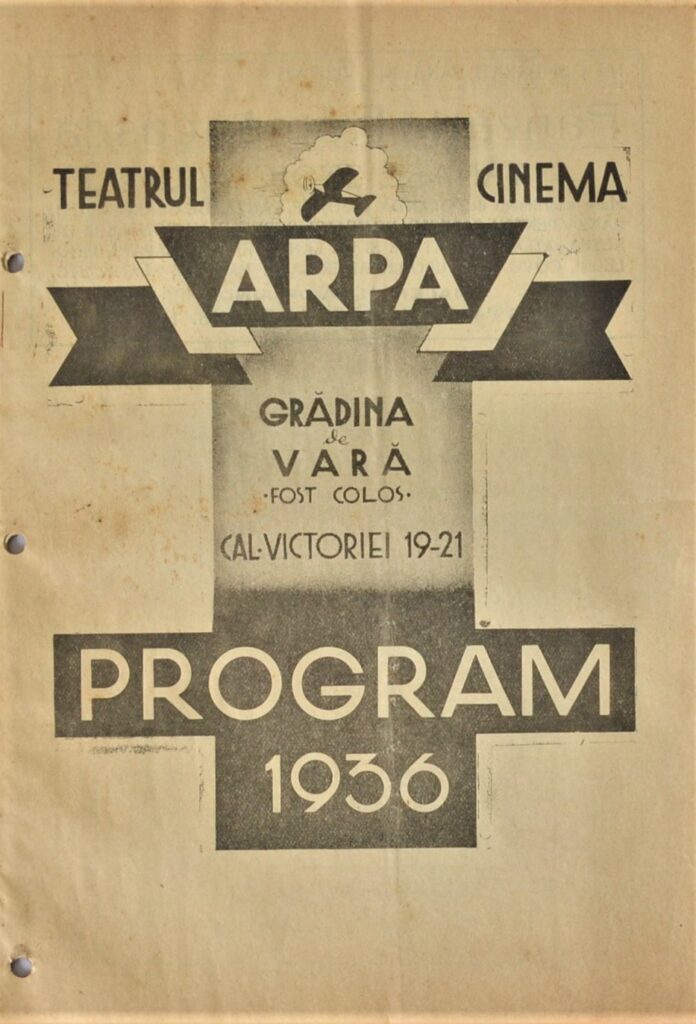
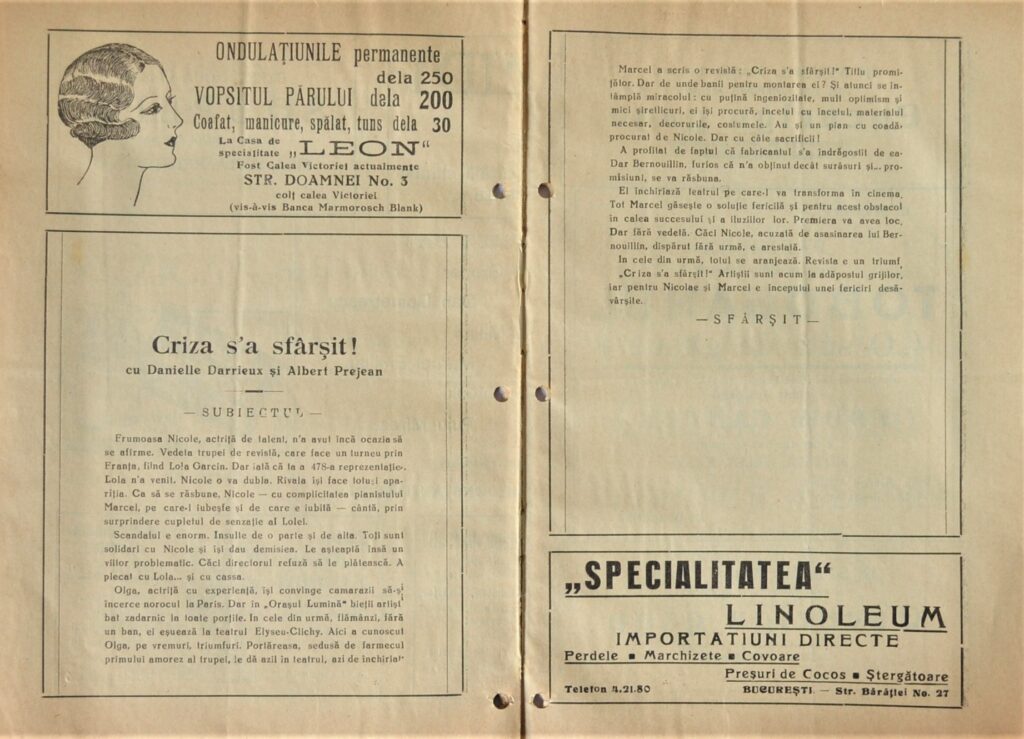
Observe a snapshot from the golden era of entertainment – the 1936 vaudeville program of ‘Teatrul Cinema ARPA’ in Bucharest, Romania. The program provides a comprehensive view of the prime era of live entertainment, blending drama, comedy, singing, and dancing. The art deco building housing the theater served as a flamboyant backdrop to the diverse performances, attracting people from all walks of life.
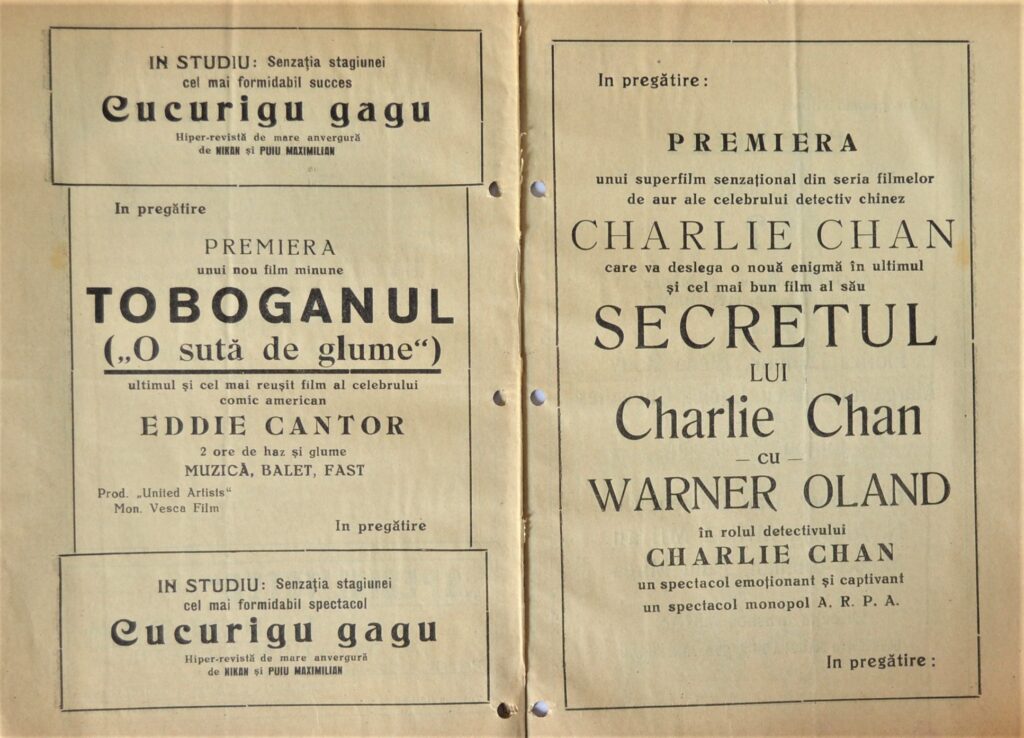
A Kaleidoscope of Performances
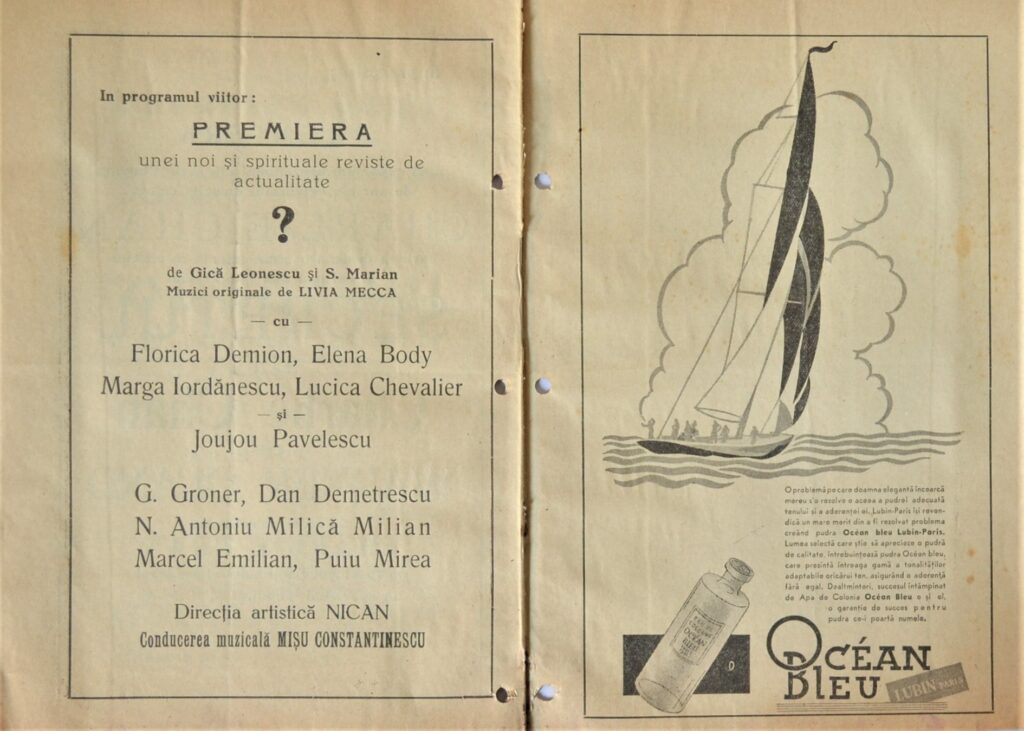
The ‘Teatrul Cinema ARPA program is reminiscent of the progressive spirit of the 1930s, reflecting the vibrant culture and the rich tapestry of theatrical performances at the time. As a typical vaudeville variety show, each act possessed its unique charm ranging from the slapstick comedy of ‘Rece Racoreala’, and ventriloquist acts to melodious musical performances. These shows provided an immersive experience, with each performance crafted to captivate, entertain, and stimulate the mind.
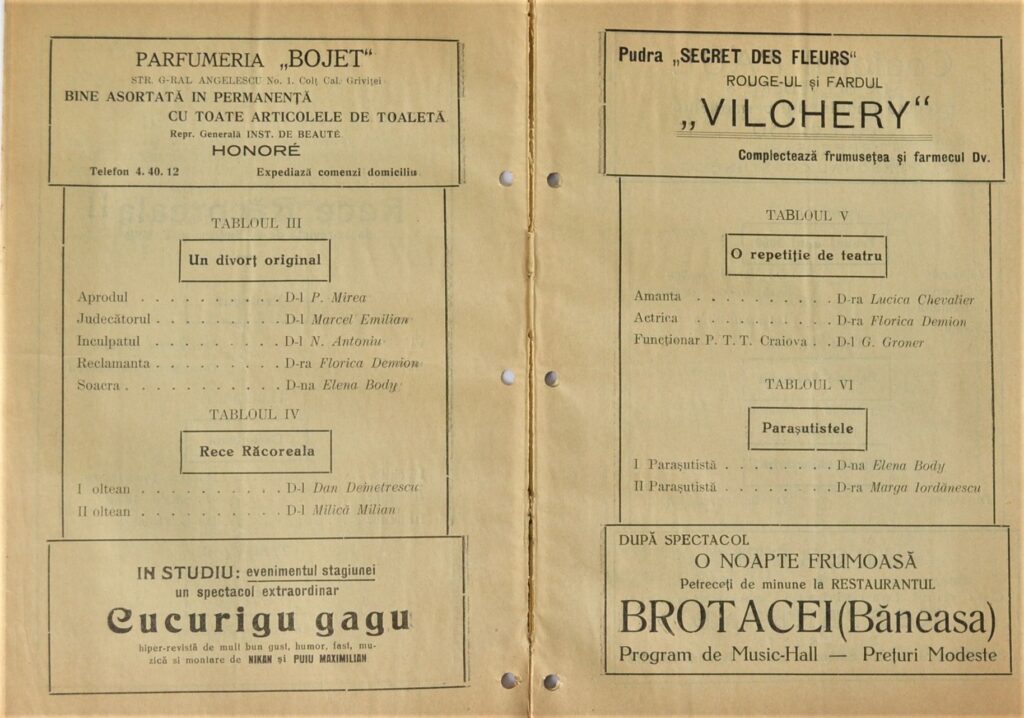
Rece Racoreala – The Main Show
Despite being a variety show, ‘Rece Racoreala’ was the star attraction on the Teatrul Cinema ARPA playbill. It was a comedy that exemplified the core elements of the vaudeville genre – exaggerated performances, larger-than-life personas, and eclectic humor. The storyline was revelatory of the social and political climate, narrated through the lens of humor. It encapsulated the essence of 1930s theatre – unafraid to challenge societal norms while delivering a heavy dose of entertainment.
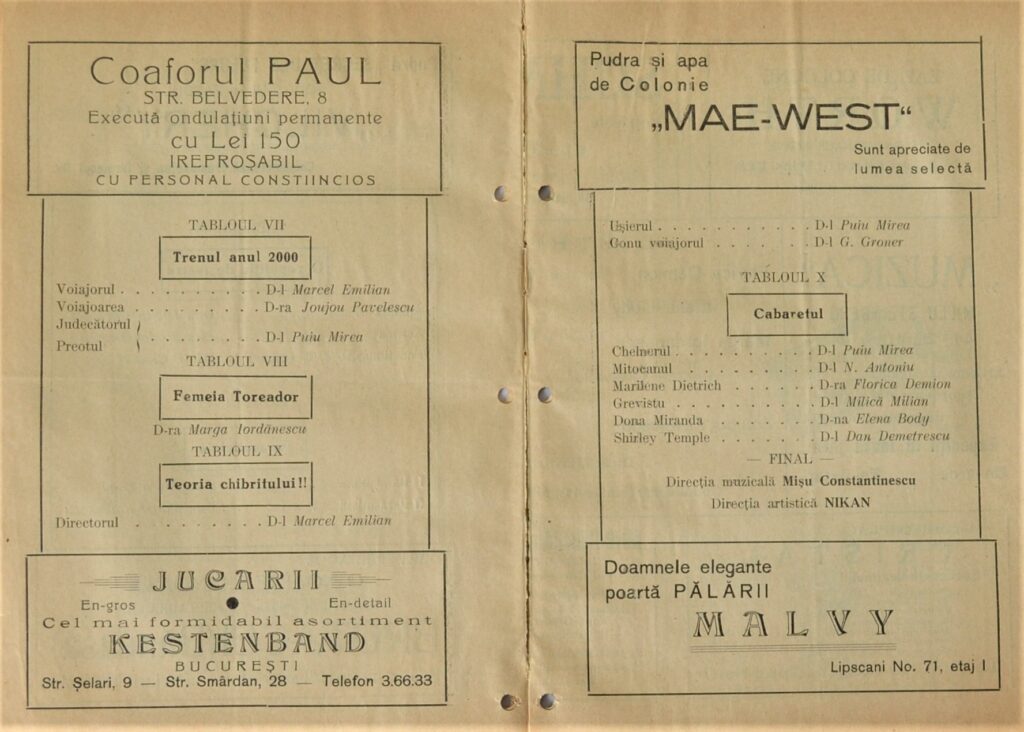
Behind the Scenes – The Craftsmen
The charm of the Teatrul Cinema ARPA was equally due to the talented artisans behind the scenes. The scenic artists painted extraordinary backdrops, drawing the audience into the world of the performance. The costume designers worked diligently, ensuring that each costume reflected the character’s role and personality. The musicians, an integral part of every show, filled the auditorium with melodies that punctuated the performances, adding depth to the characters and the narratives.
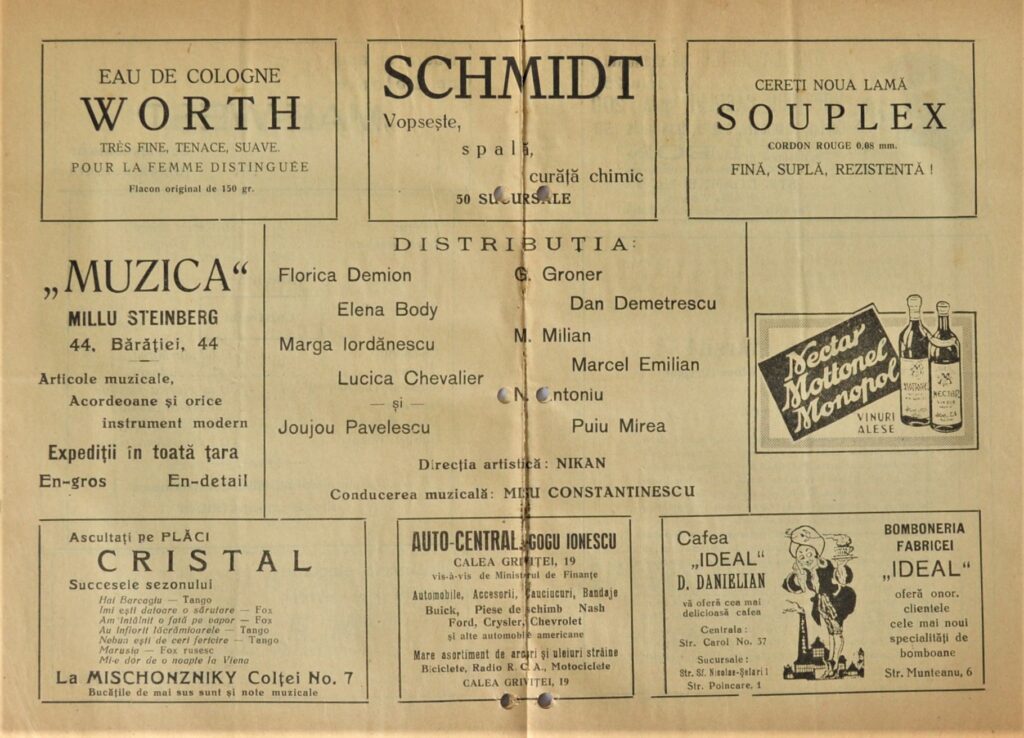
The Legacy of ‘Teatrul Cinema ARPA’
Despite the passage of time, the legacy of ‘Teatrul Cinema ARPA’s 1936 vaudeville program endures. It serves as a template of a bygone era when vaudeville took center stage, delighting audiences with a repertoire spanning various artistic genres. Today, it provides insights into the evolution of live entertainment, highlighting the vibrant creativity, innovation, and resilience inherent in the performing arts industry. To engage with this program is akin to time-traveling, offering us glimpses into the cultural, social, and political fabric of the 1930s.